
Heat Treatment of Yellow to Red Jadeite Jade Fei Cui - A Comparative Study
Many in the trade often had to clarify this point: if my jadeite jade has undergone heat treatment, do gemological laboratories write it as Type A, Type B, Type C or Type B+C?
Answer: GemRight reports will use none of the above Types and write the detected enhancement as it is - Indications of heat. This is because the Types each have their strict definitions and were devised in a time where heat treatment were not common. GemRight’s general principle is to disclose treatments / enhancements as detected and then see if there are existing well-known terminologies to help consumers understand it better (such as the Type system).
Most of this questions naturally arise from customers with yellow to red jadeite jades. This article focuses on signs that consumers can look for themselves to form an opinion on presence of heat treatment on their jadeite jade.
The scientific logic
All yellow to red colouration of jadeite jade is due to the accumulation of Fe3+ iron oxides within its aggregate crystal structure over long periods of time through supergene processes.
However, majority of the iron oxide staining occurs when they are in the Fe2+ state, producing a grayish green range of colour that the trade often called Oily Green (油青) or Cat Water (猫水). Heating in an oxidising environment (e.g. use of brownish bromine water) oxidises these Fe2+ to lose an electron and become Fe3+, attaining that saturated reddish/brownish colour that often command a higher price in the market.
Internal patterning
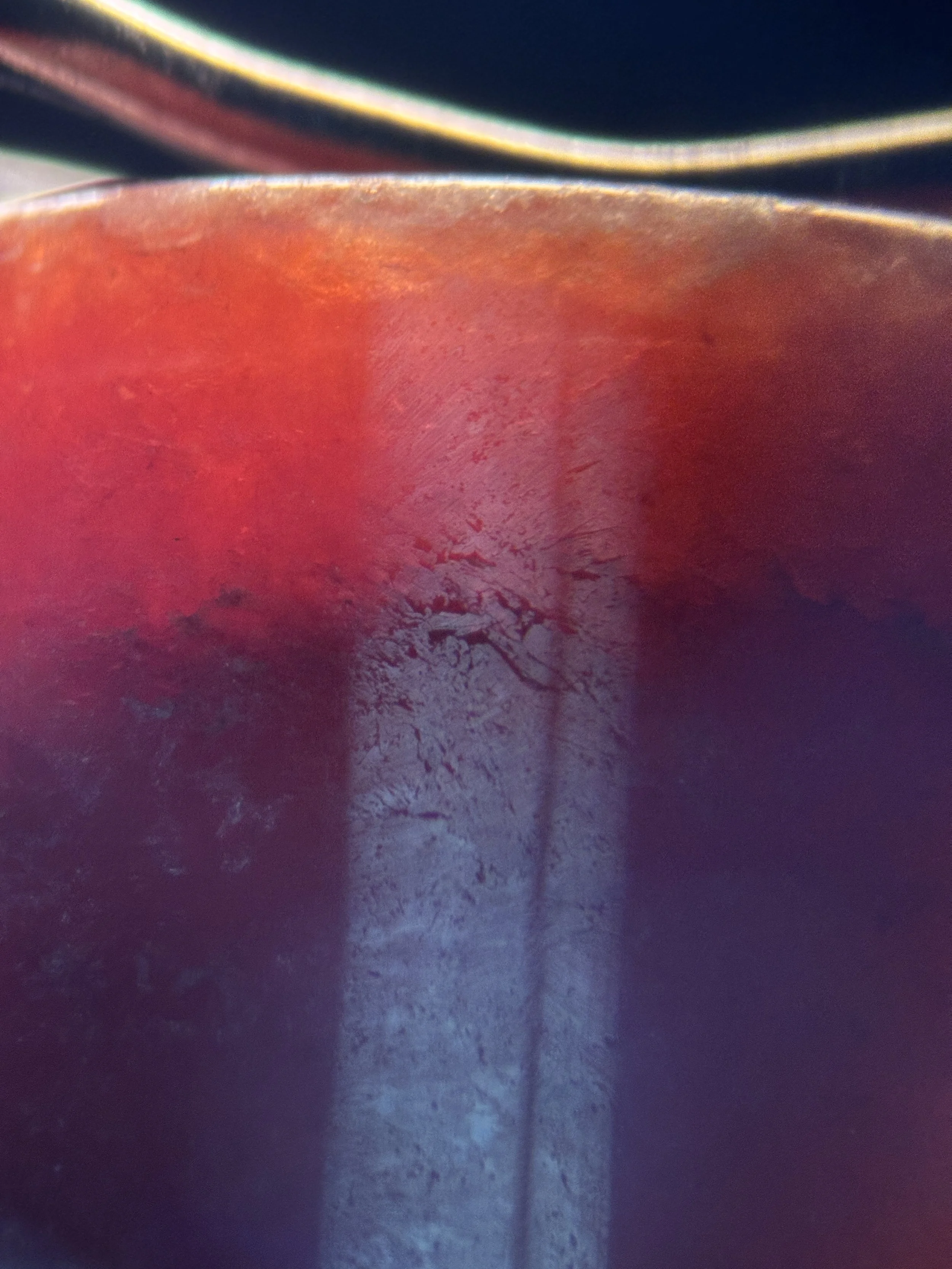
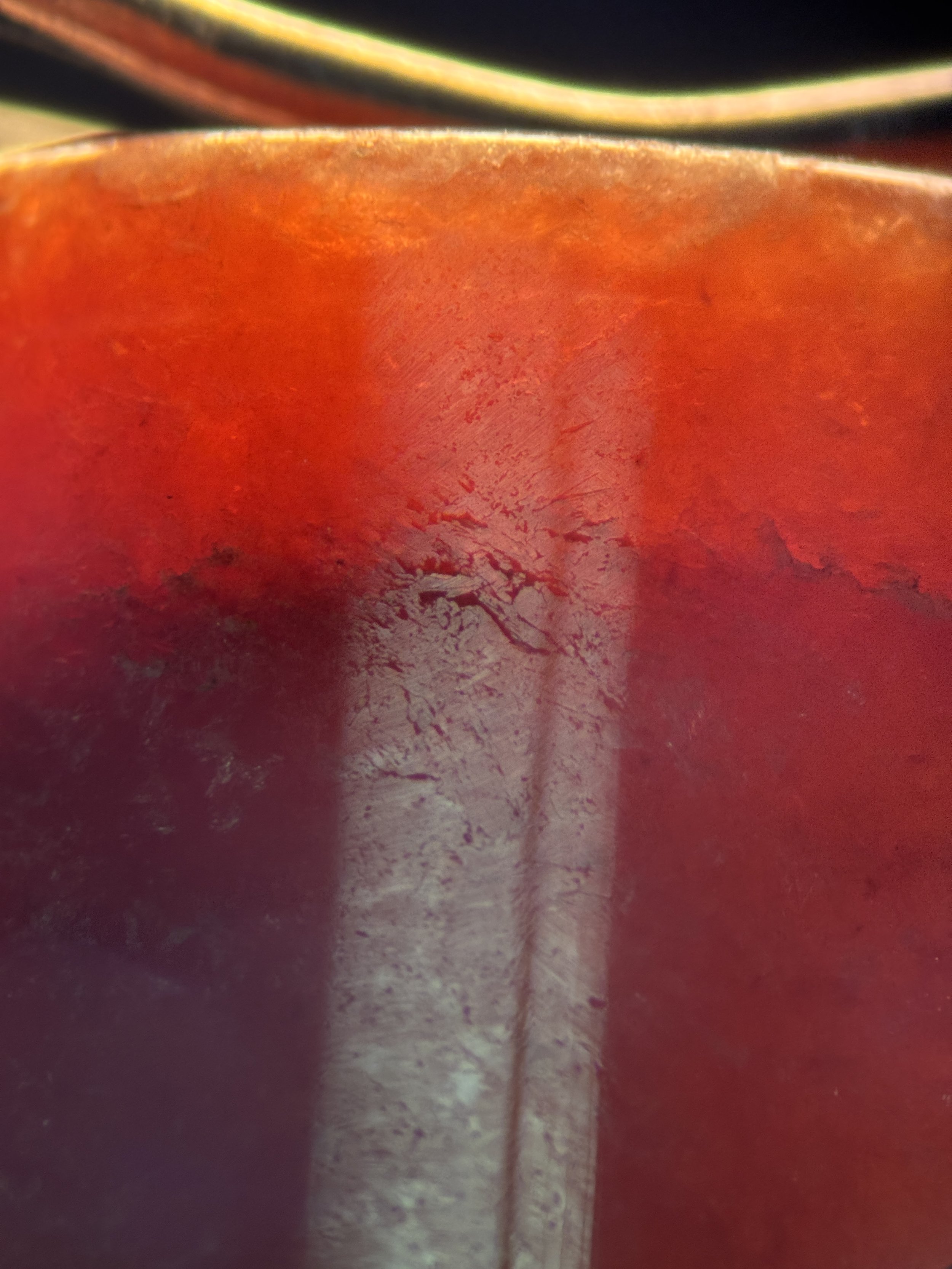
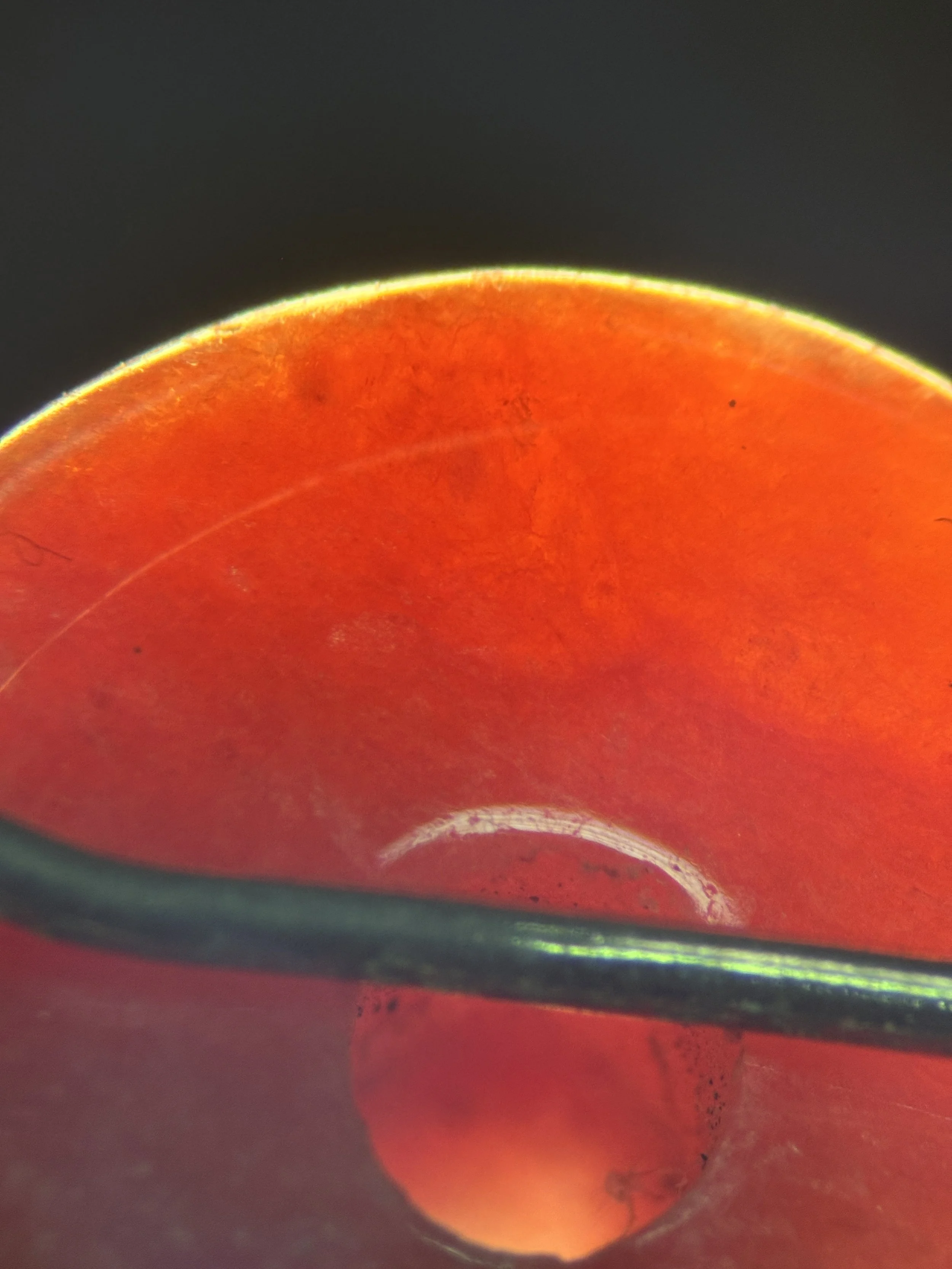
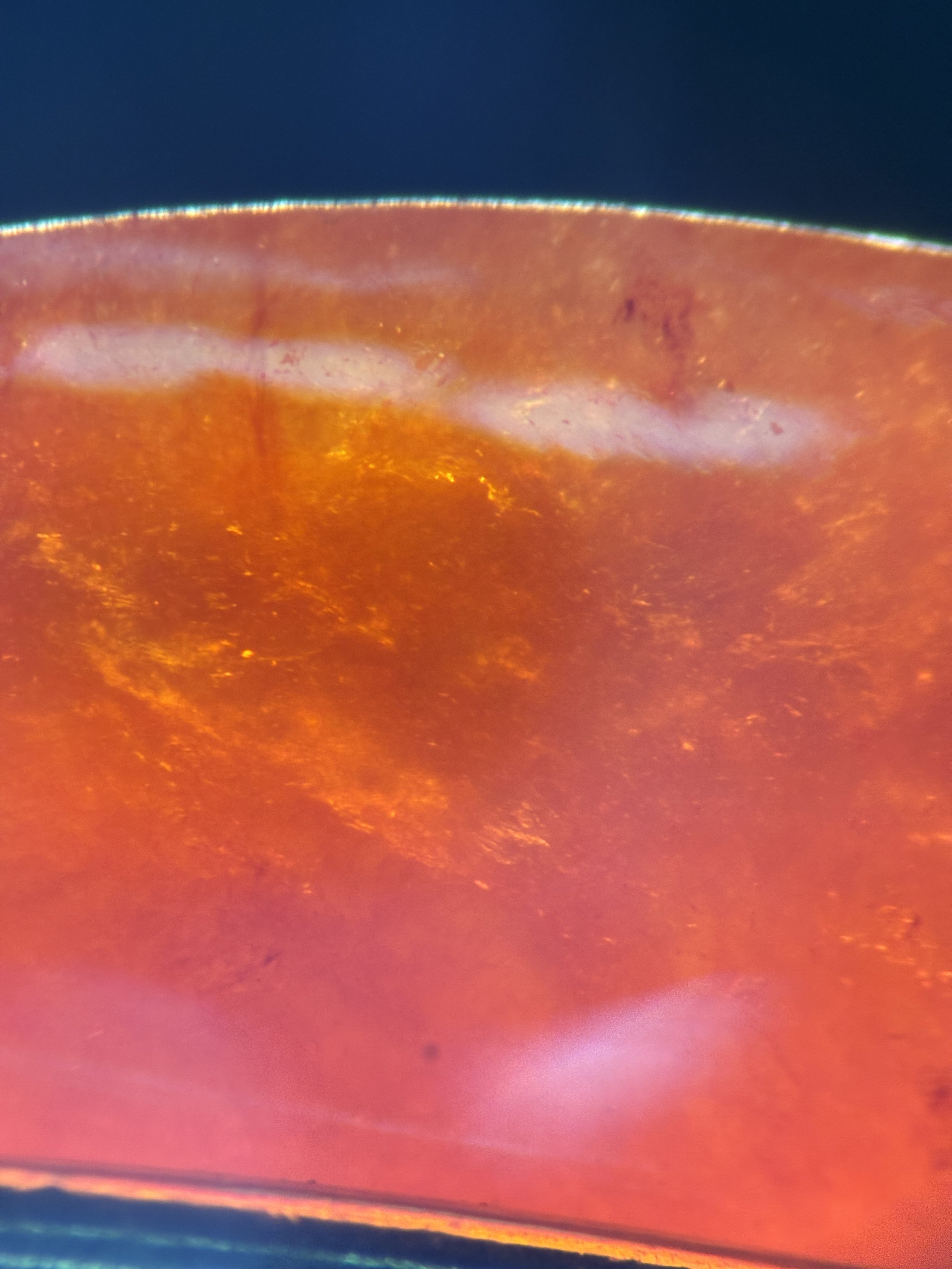
Natural jadeite jade’s yellow to reddish-brownish colouration actually is nature’s way of “dyeing” the gemstone. Hence, the colours are often distributed in the gemstone in a distinct root-like / loofah-like pattern as in the samples below. This pattern is harder to note the smaller the grain size. Consequently, the colour distribution is more “random” and less homogenous.
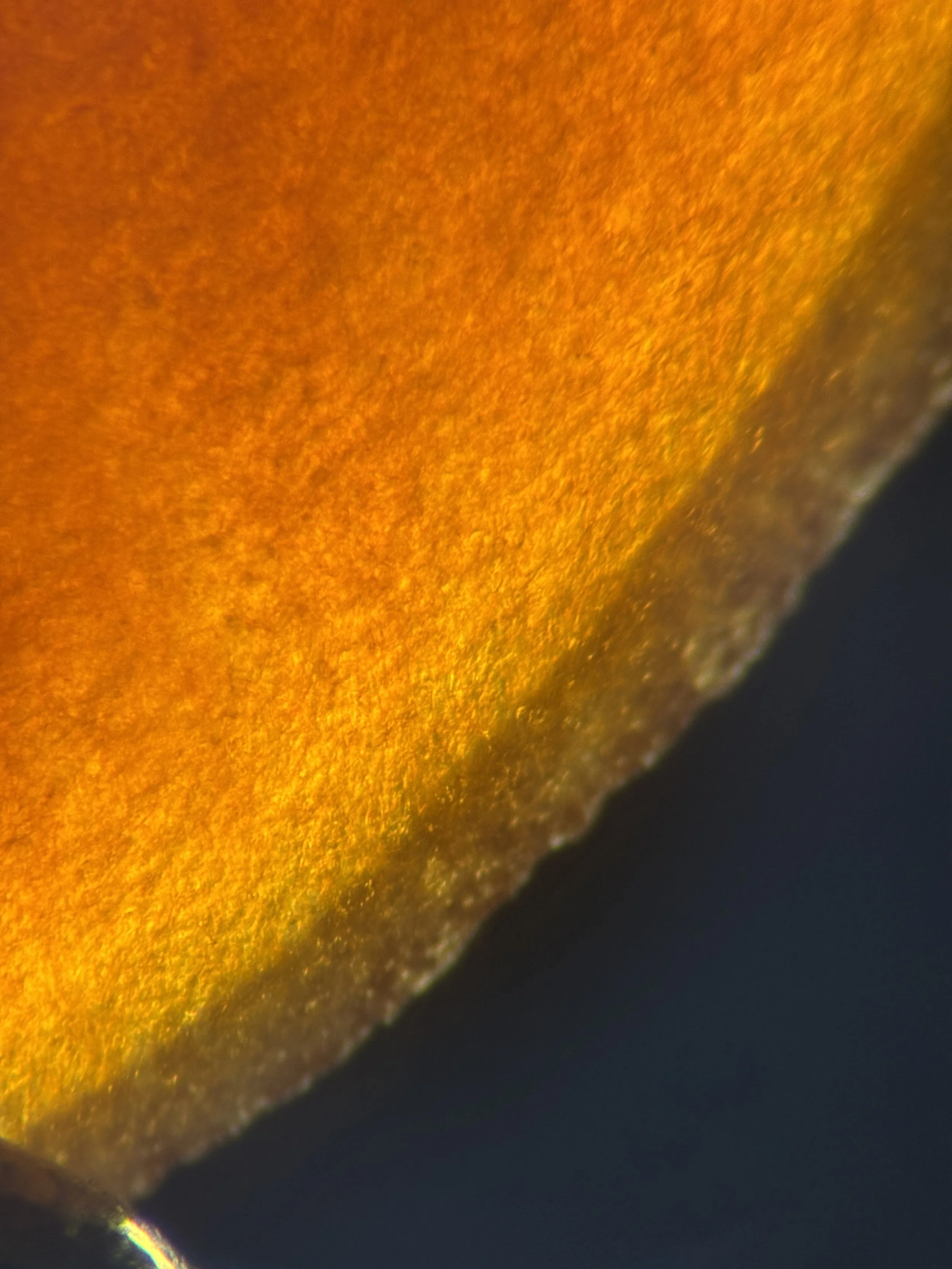
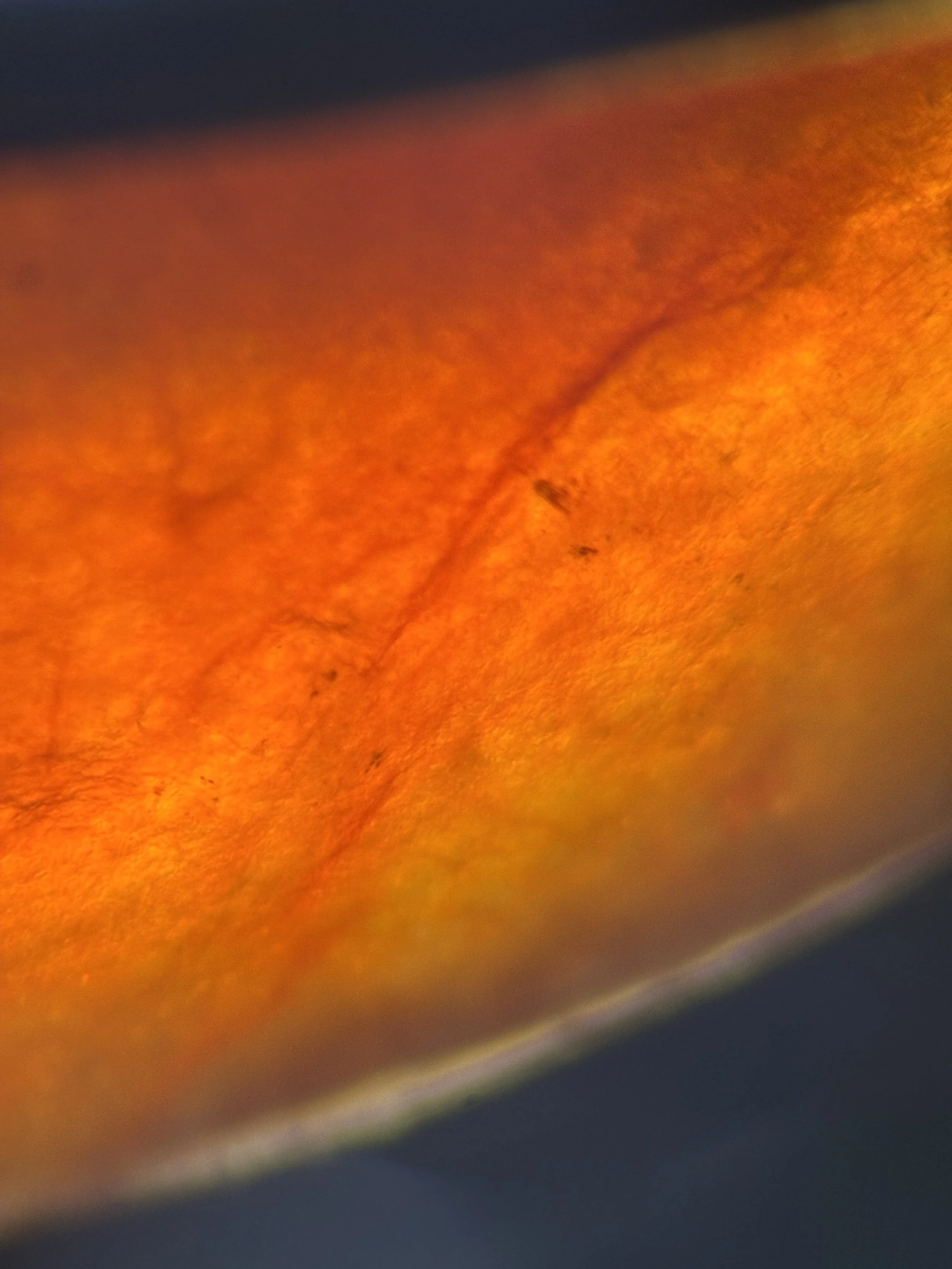
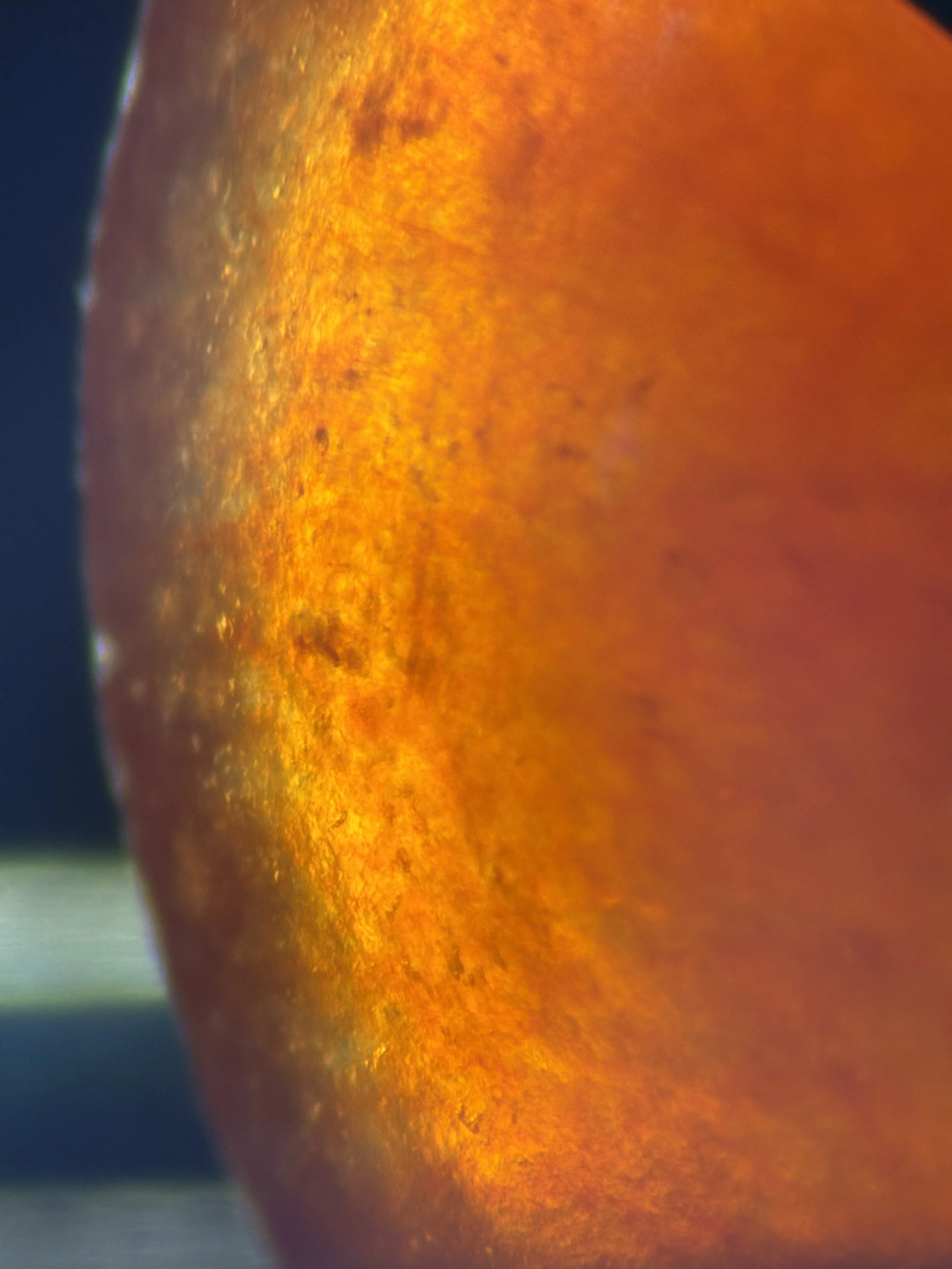
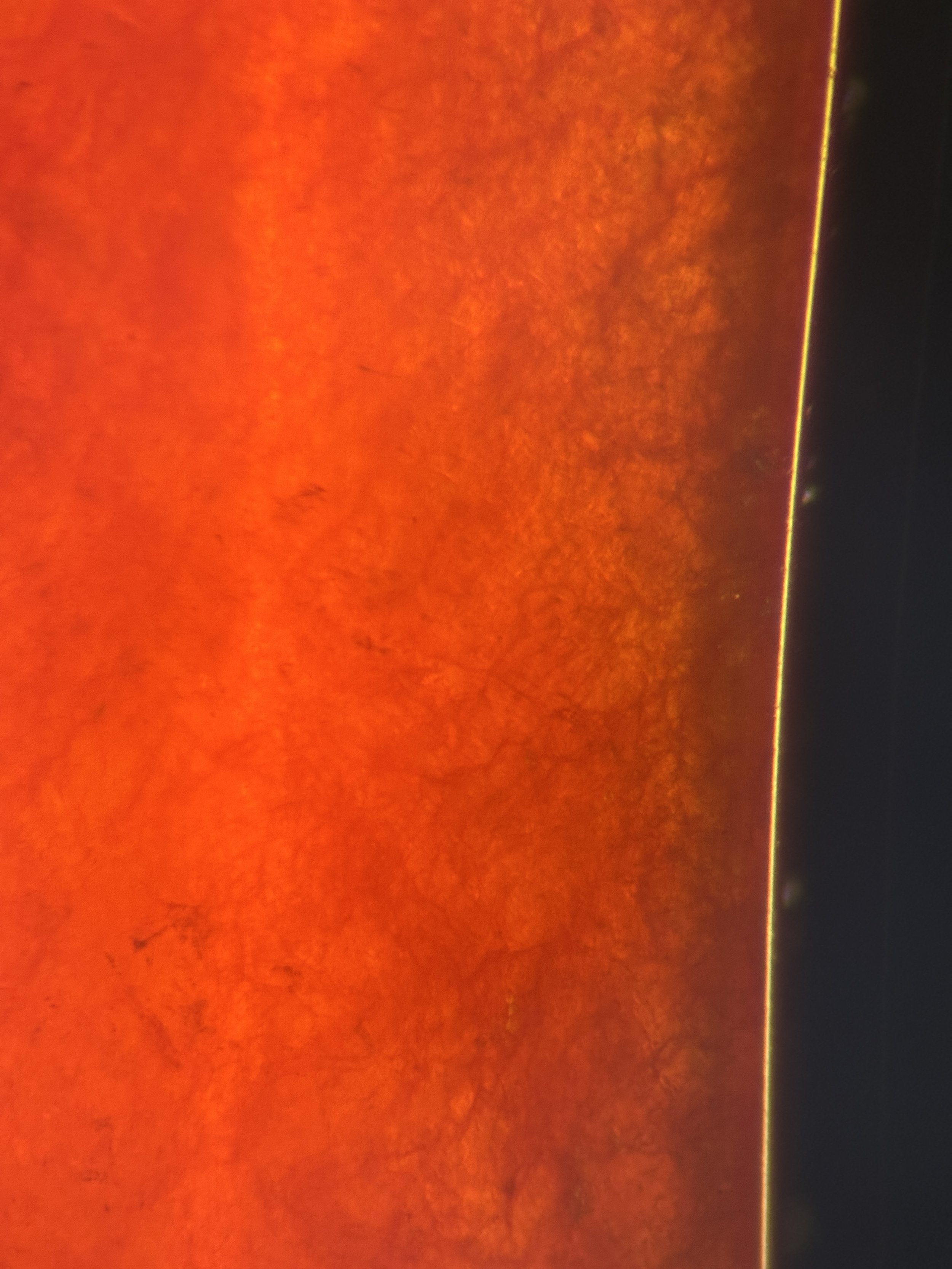
Heat treatment is often at temperatures from 100 to 500 degrees Celsius where it is not high enough to melt or recrystallise the material but high enough to motivate the oxidation of most Fe2+ available. This temperature often disrupts the internal natural graining of the aggregate system. What we observe most of the time is the blurred boundary between grains and disturbed the distinct root-like / loofah-like pattern.
Surface conditions
The abovementioned disruption of internal natural graining of the aggregate system during the heating process can be observed on its surfaces. They often resemble scorched land or that of acid-bleached jadeite jade and more homogenously distributed. You can see that in the second set of photos above. The trade today sometimes refers this phenomenon as coarser graining or looks drier.
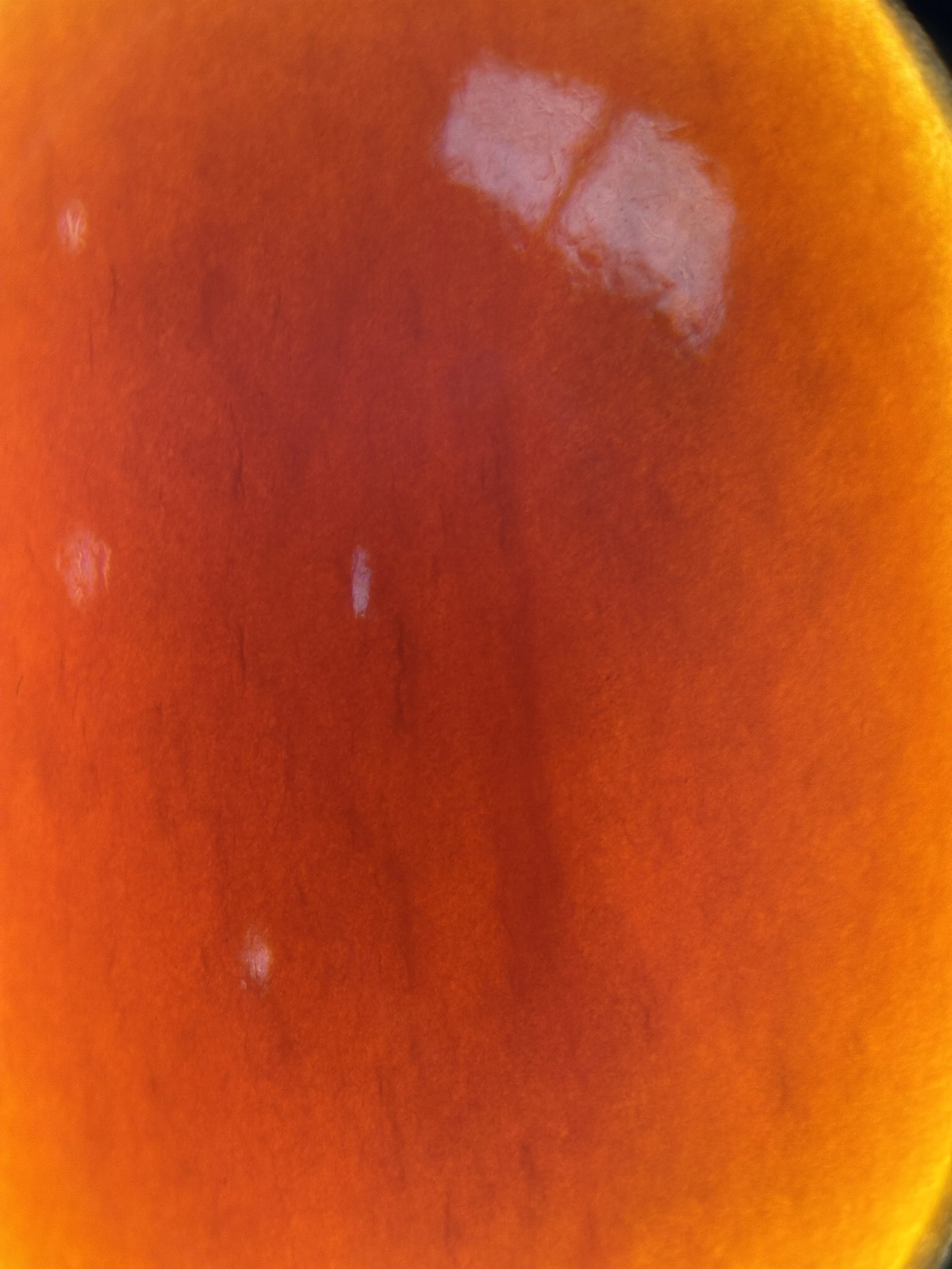
Compare those surface conditions with natural untreated jadeite jade below (see the reflected white light on the surface of the samples):
For certainty, do consider sending your items to gemological laboratories which have experience and technological capabilities to determine this treatment for you.