
Identifying Natural River-Tumbled Nephrite Jade Pebbles
The quest for natural river-tumbled nephrite jade pebbles continues to intensify as the prices for these treasured pieces continue to increase year-on-year. This continued price increase is understandable as these pebbles are naturally tumbled and settled in the riverbed many years ago when the river volume was much higher. In essence, these river-tumbled pebbles form a very small proportion of discoverable nephrite jade, resulting in many collectors trying to land themselves a genuine piece. This in turn has stoked the growth of multiple technique in processing non-river-tumbled pieces to imitate the real deal since our expedition to understand this mineral and its market in 2012.
River-tumbled pieces are rounded with no obvious start and end to their edges. They are often considered by the market to be heavier and denser as the more brittle and looser parts of the aggregate would not have survived years of tumbling in the river. As such, they often have better translucency as compared to those mined from the mountains directly. This tumbling process would also have produced consistent random dents/impressions on the surface of the pebbles that the trade refers to as “pores on the skin”. Some of these pebbles features iron oxide staining of various hue saturations.
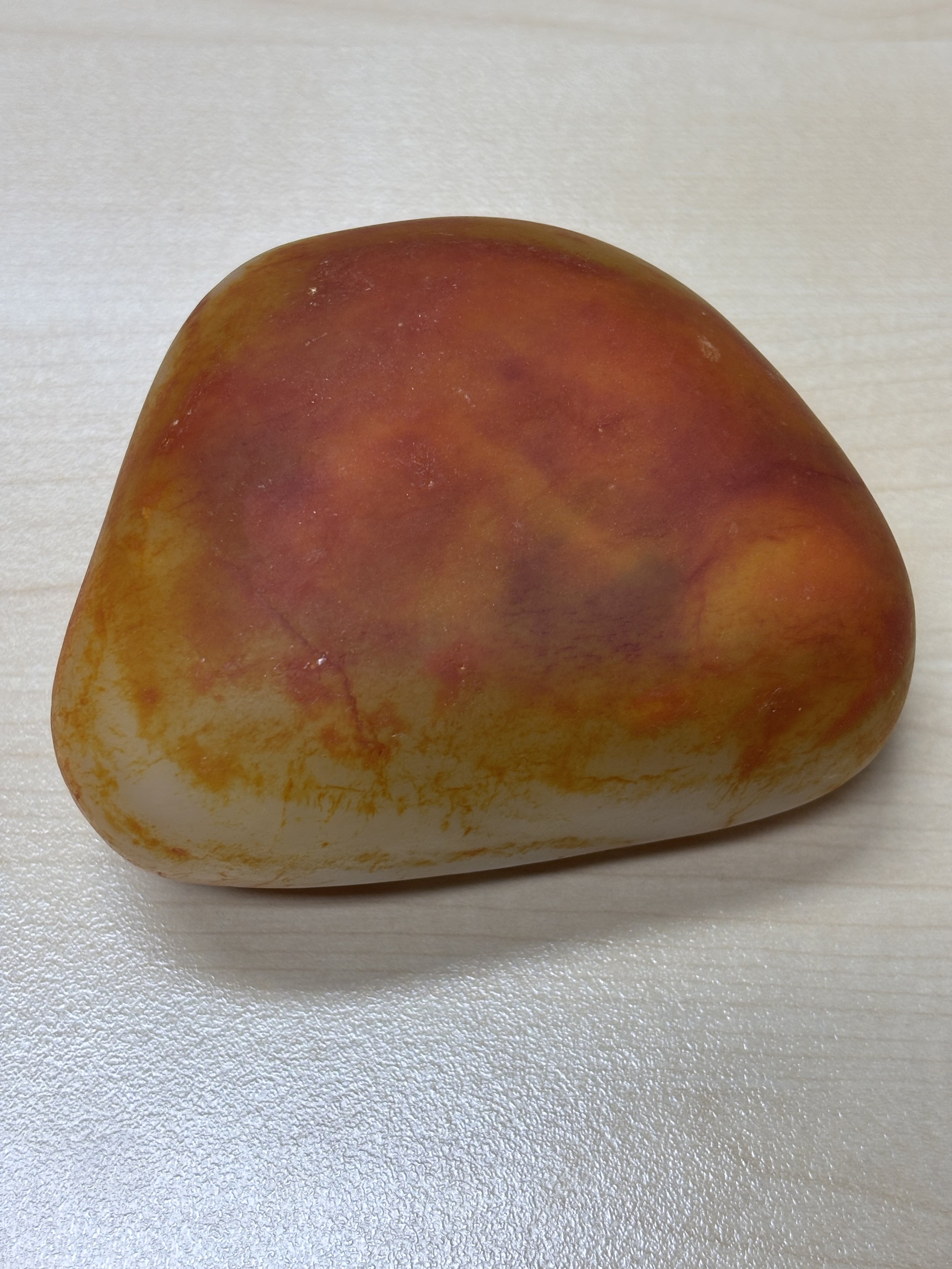
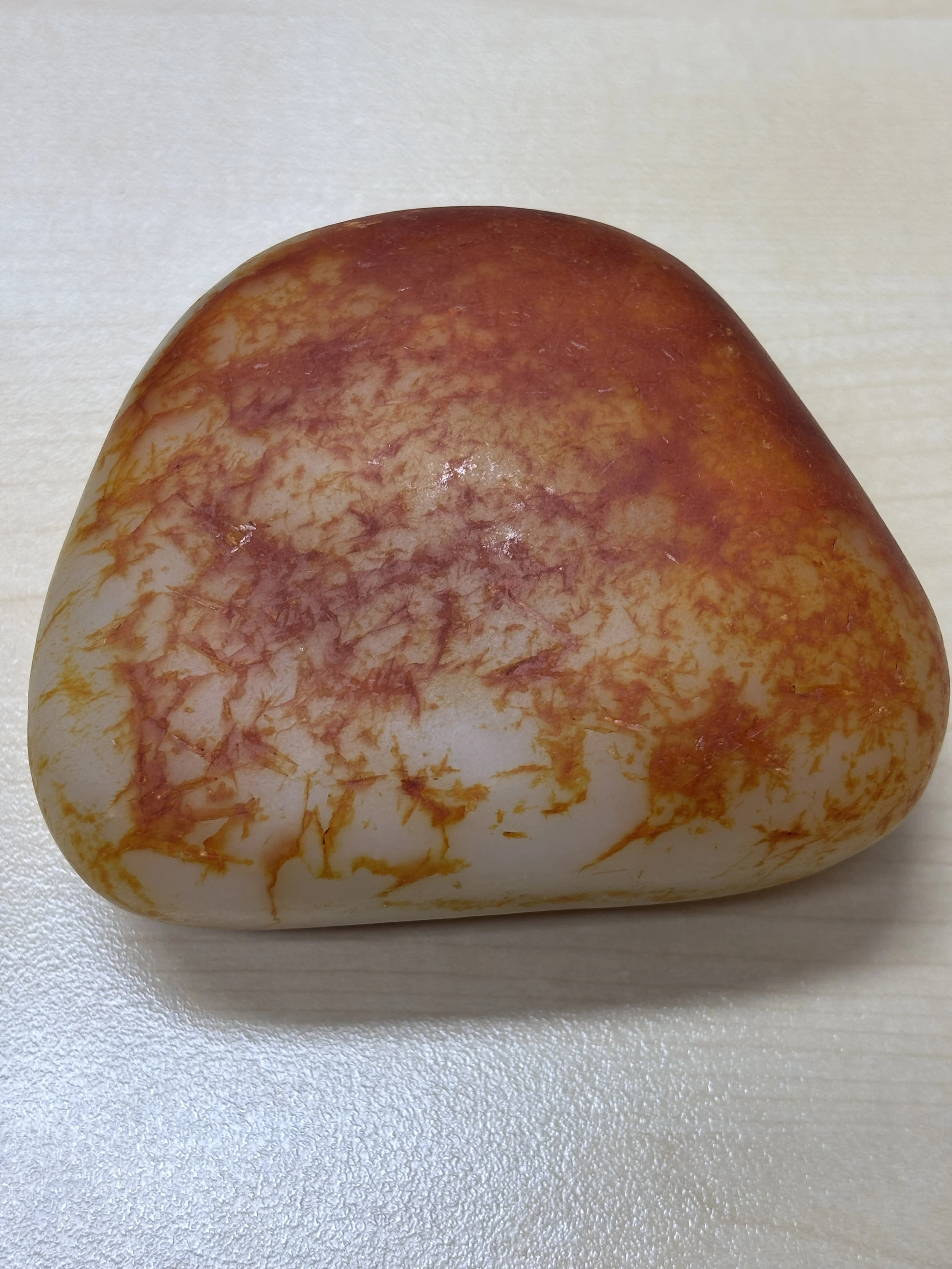
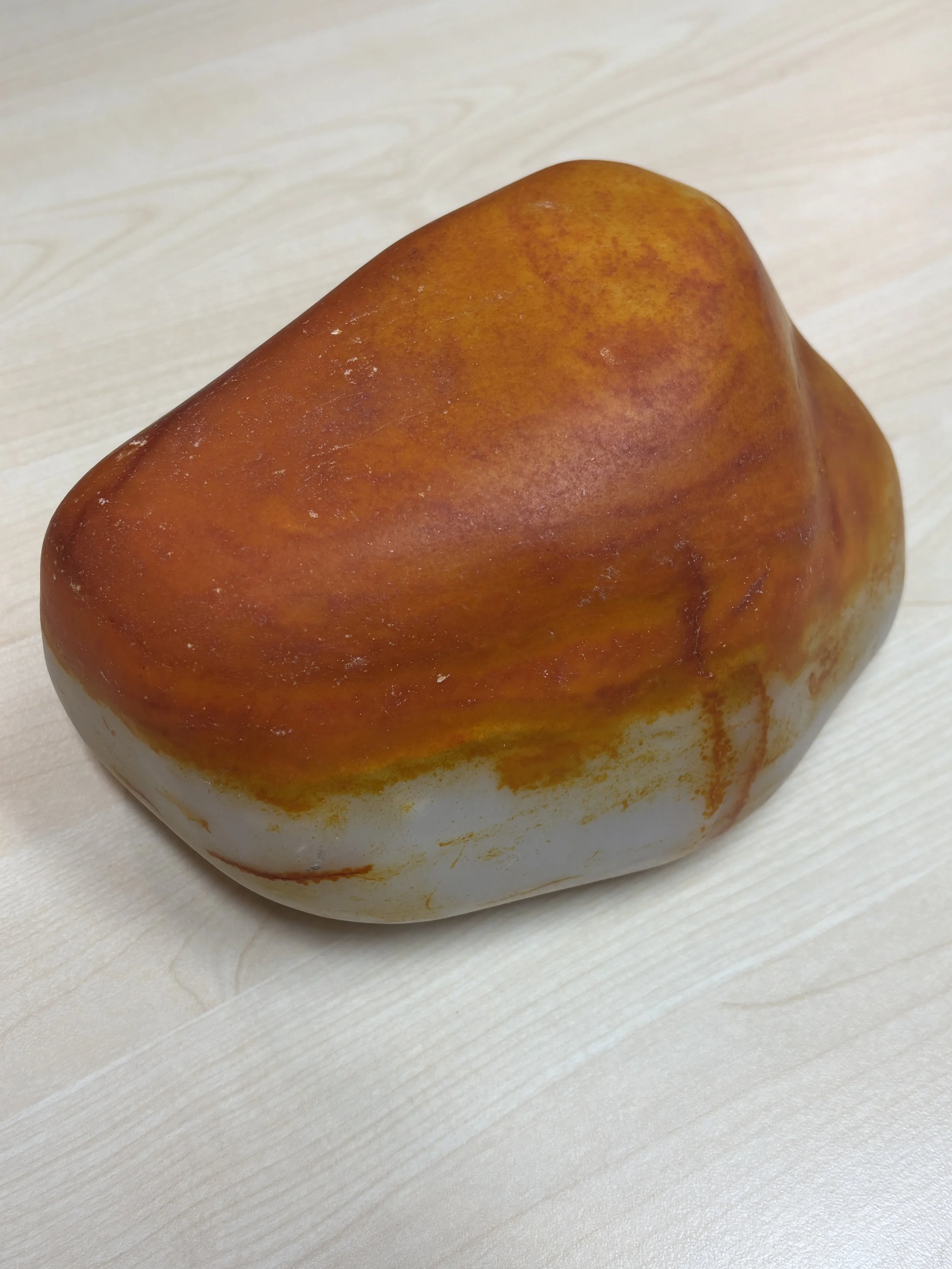

We have selected 2 pieces of nephrite jade samples for this discussion that was sent to our laboratory for testing and reporting recently. One weighed about 760 grams and the other 4900 grams. Both are nephrite jade items artificially enhanced to imitate the appearance of naturally river-tumbled ones.
Telltale Sign 1 - Rounded edges with a flat-ish plane/side
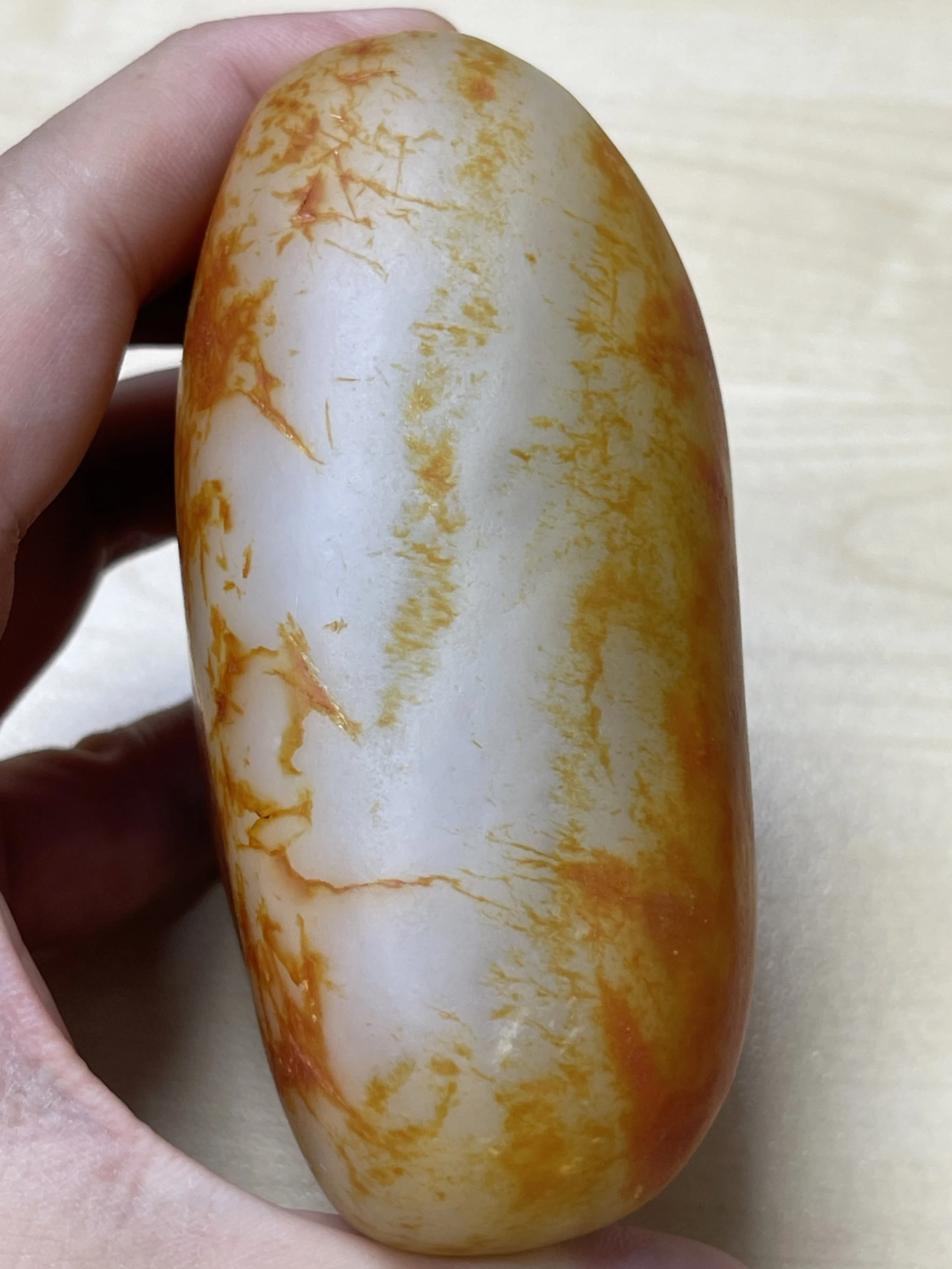
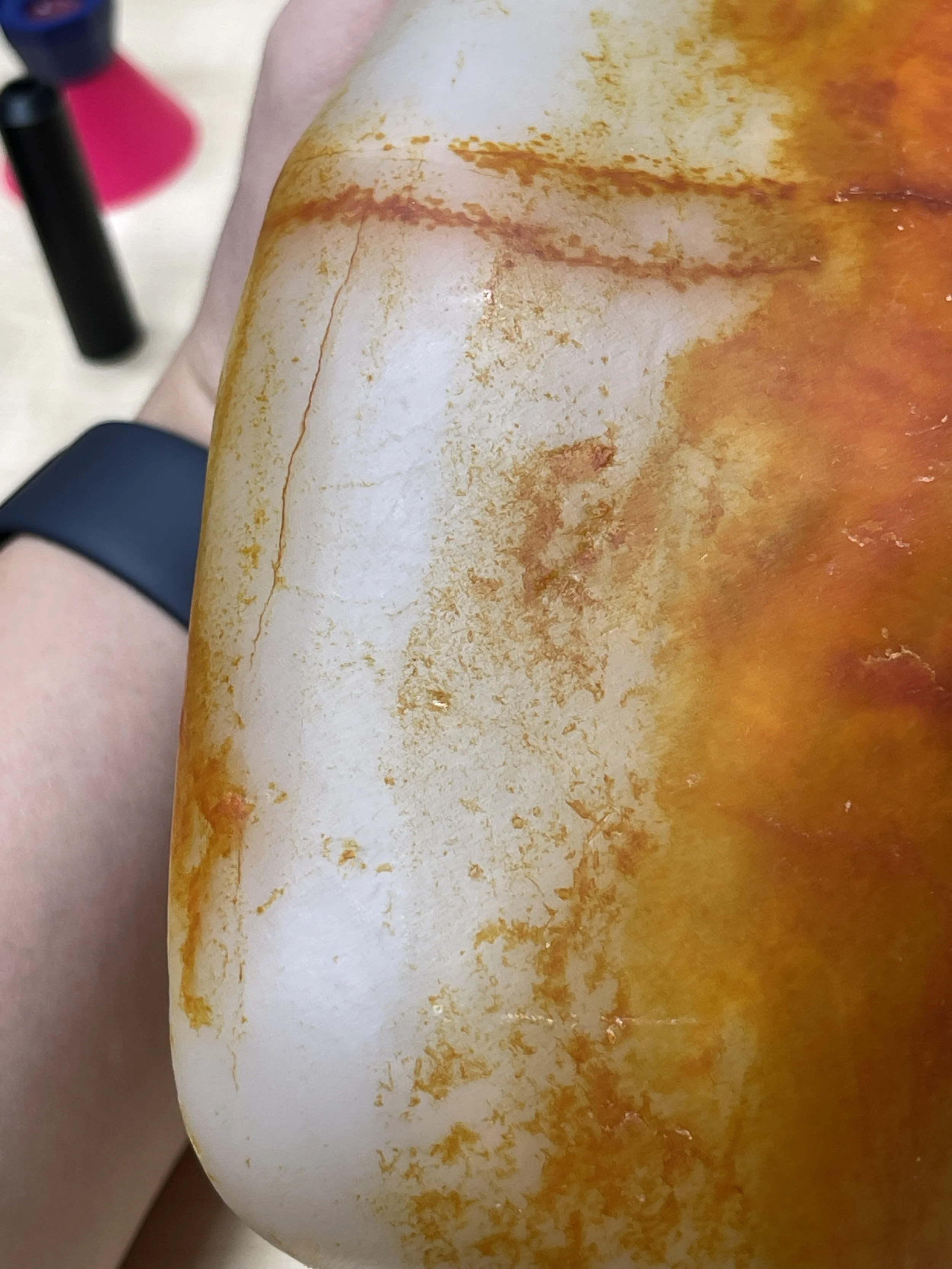
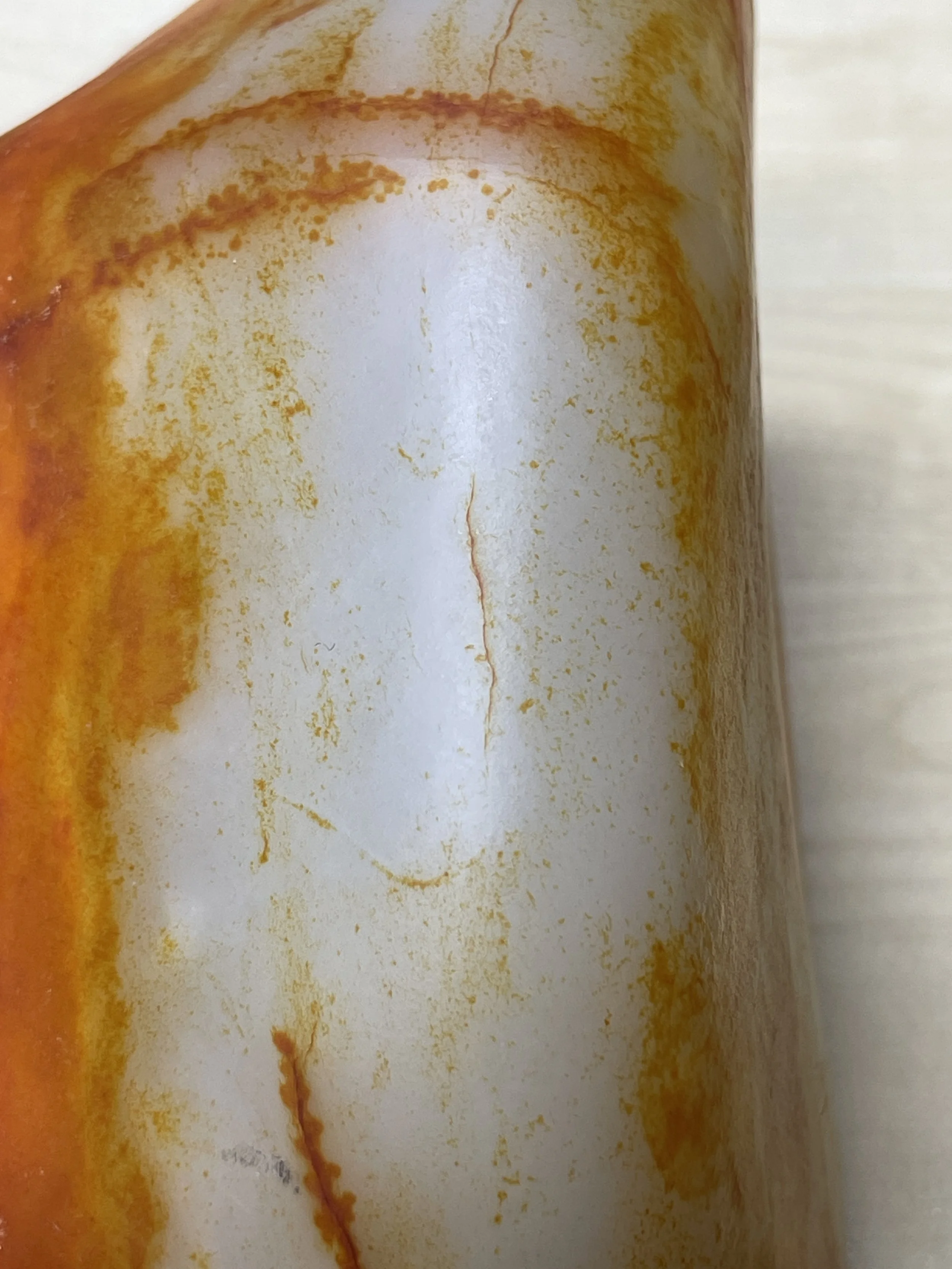
In order to imitate the natural rounded sides, these items are often grinded down using mechanical tools. In these samples, a shoddy work was done in the grinding, leaving an abnormal flat-ish surface on a supposedly rounded edge. We have also come across cases where the grinding lines (curved parallel lines on the surface) are still visible. In cases where the grinding work was better i.e. no visible flat-ish surface, we noticed that the natural dents on the surface became shallower and more consistent as compared to other parts on the same pebble.
Telltale Sign 2 - Superficial and spotty iron oxide staining
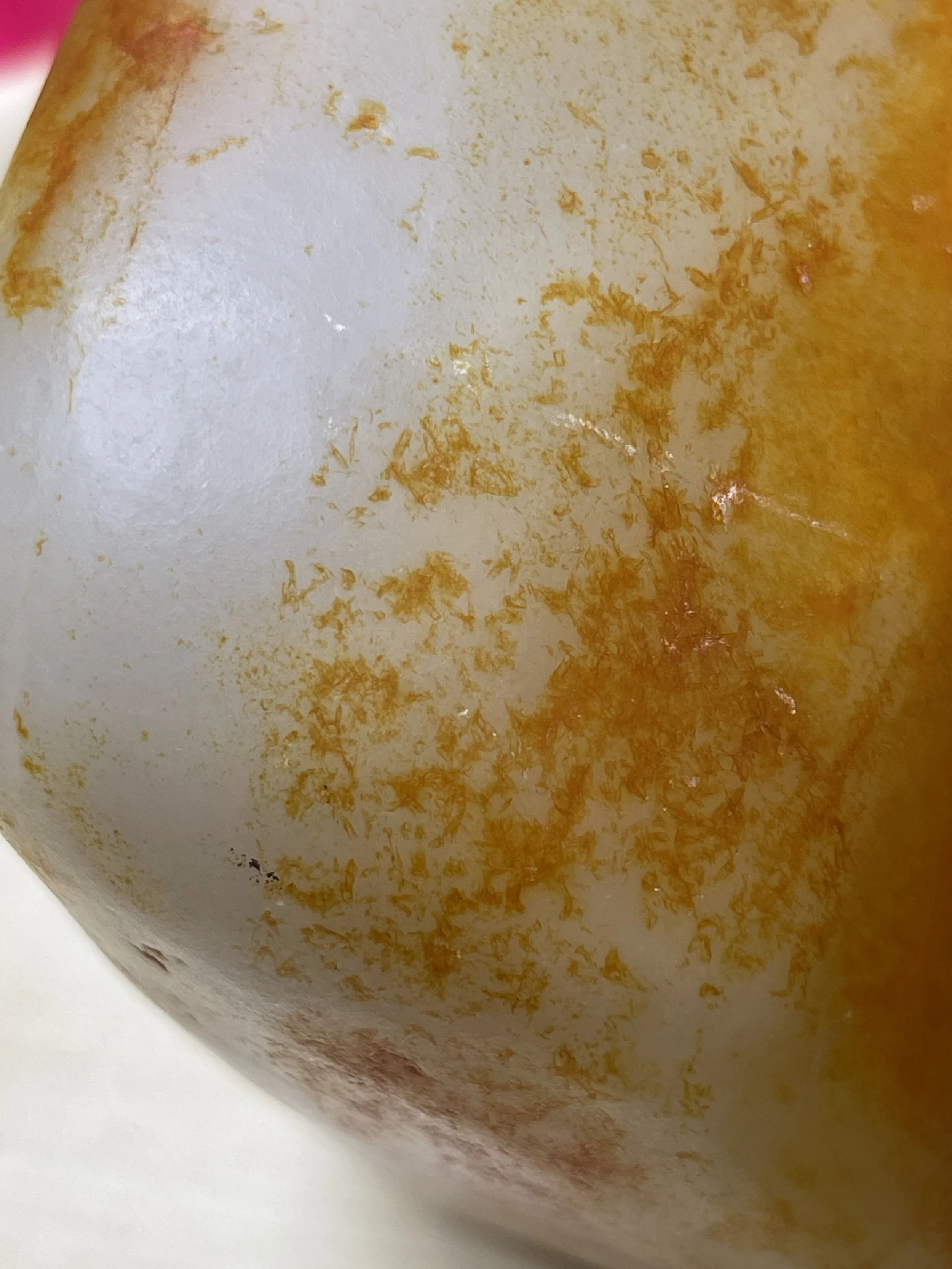
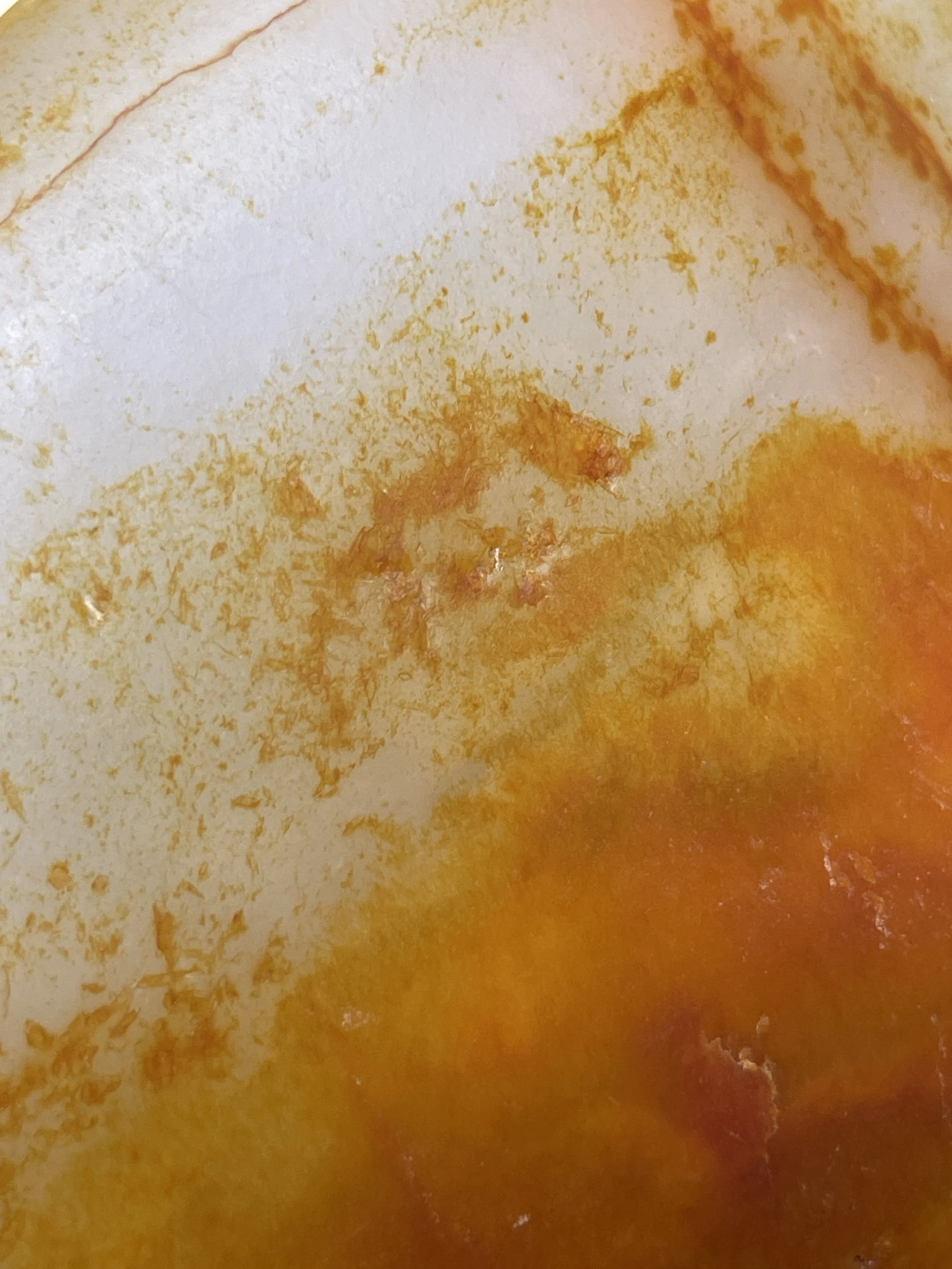
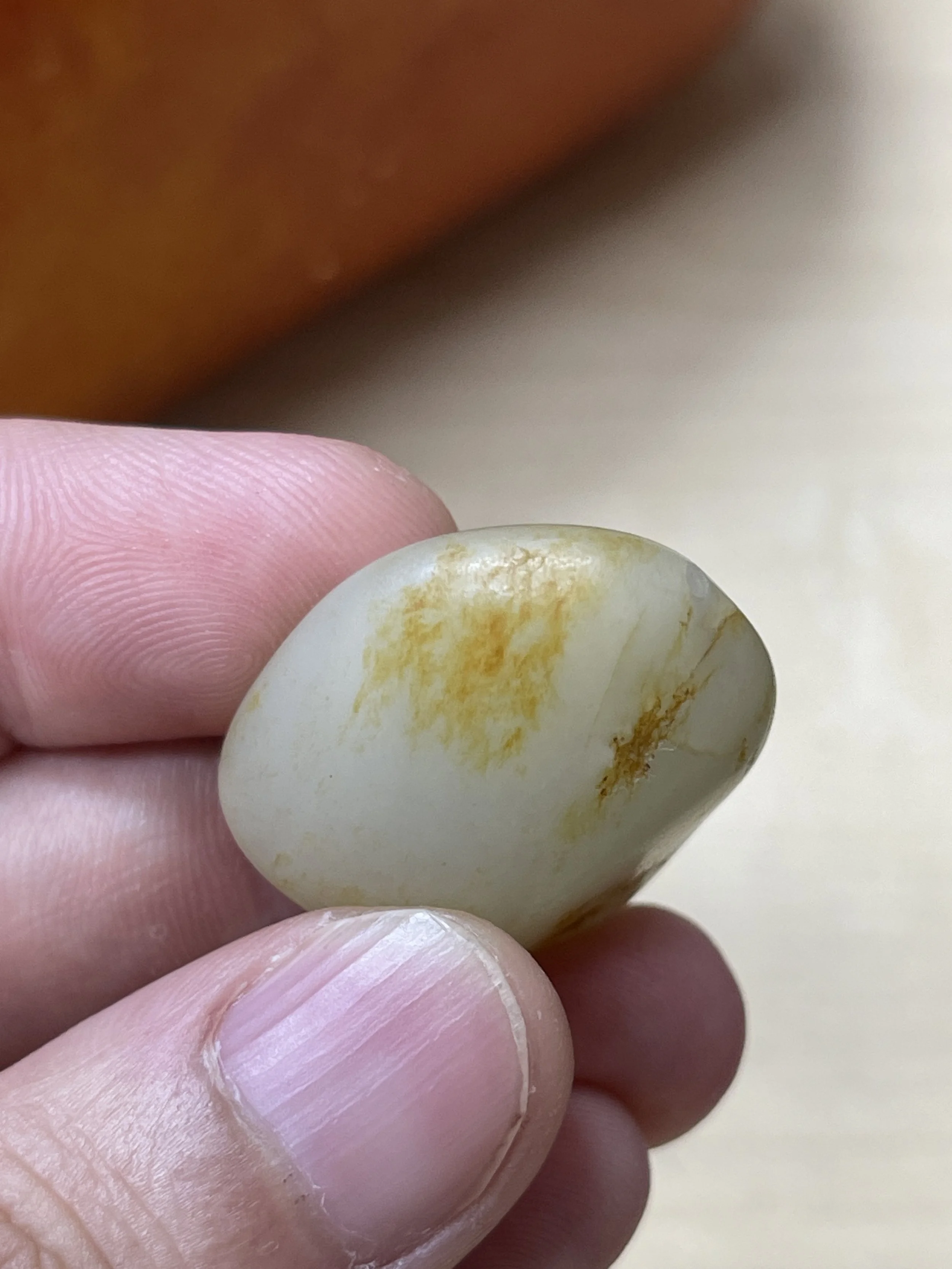
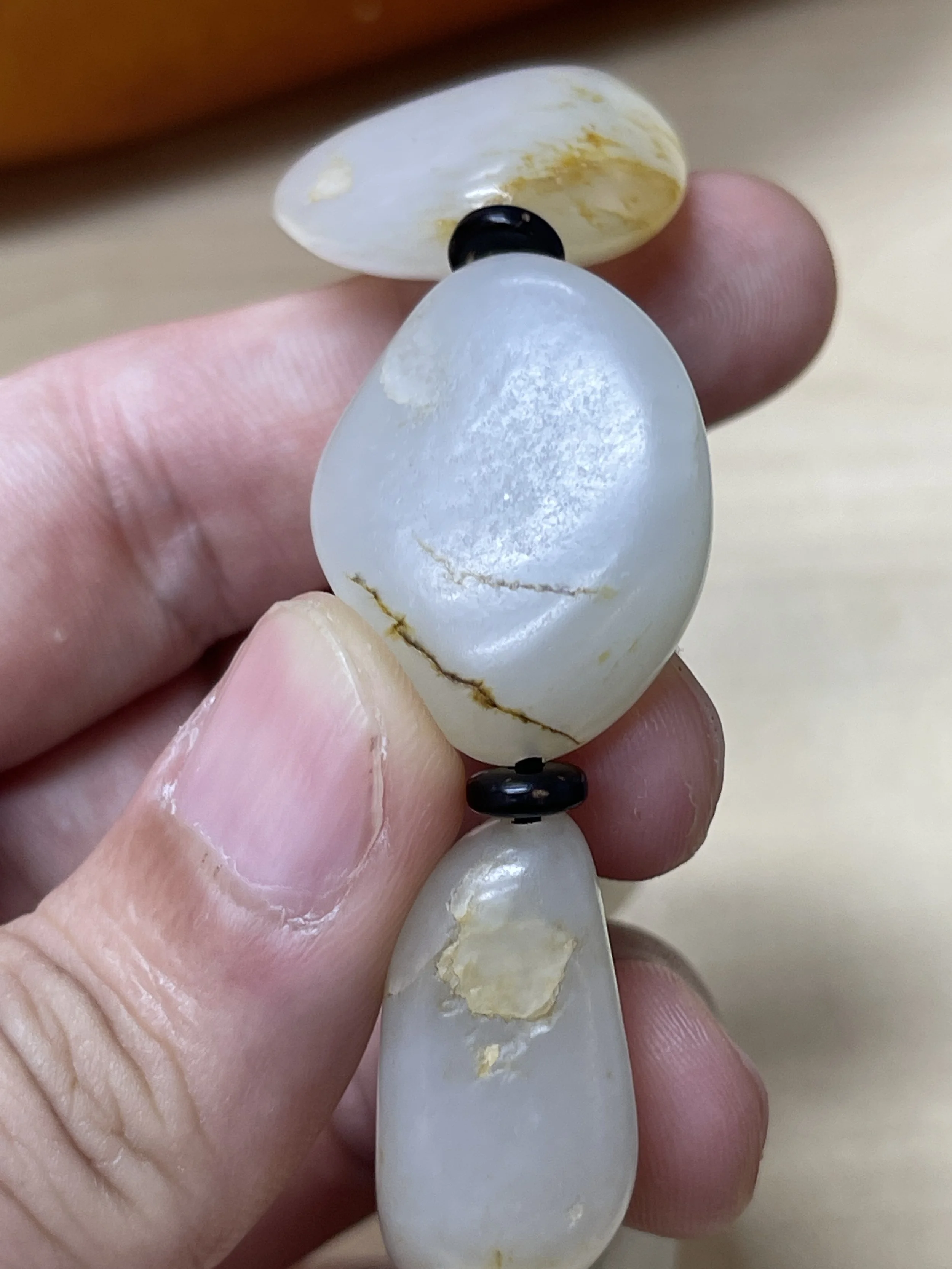
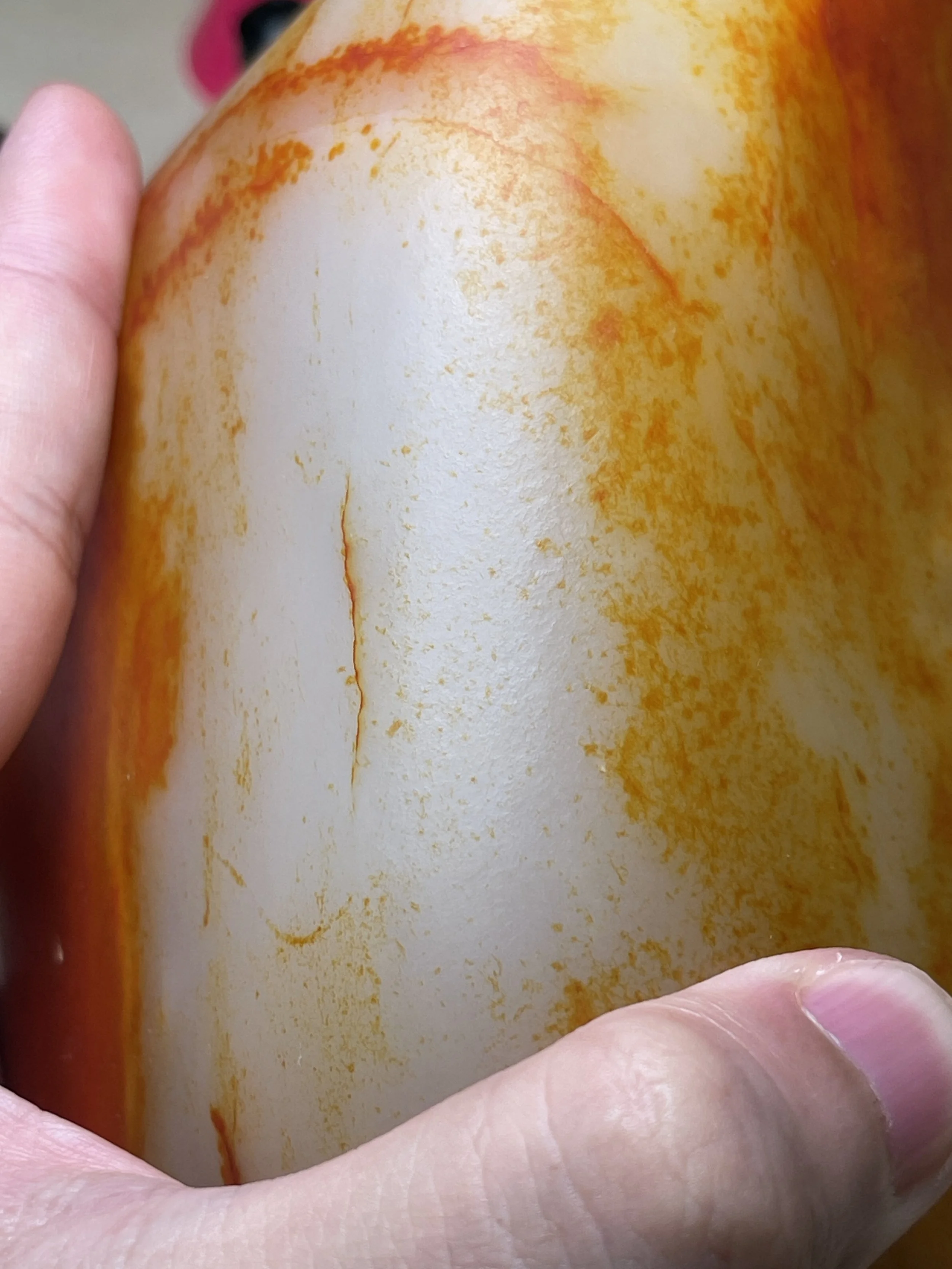
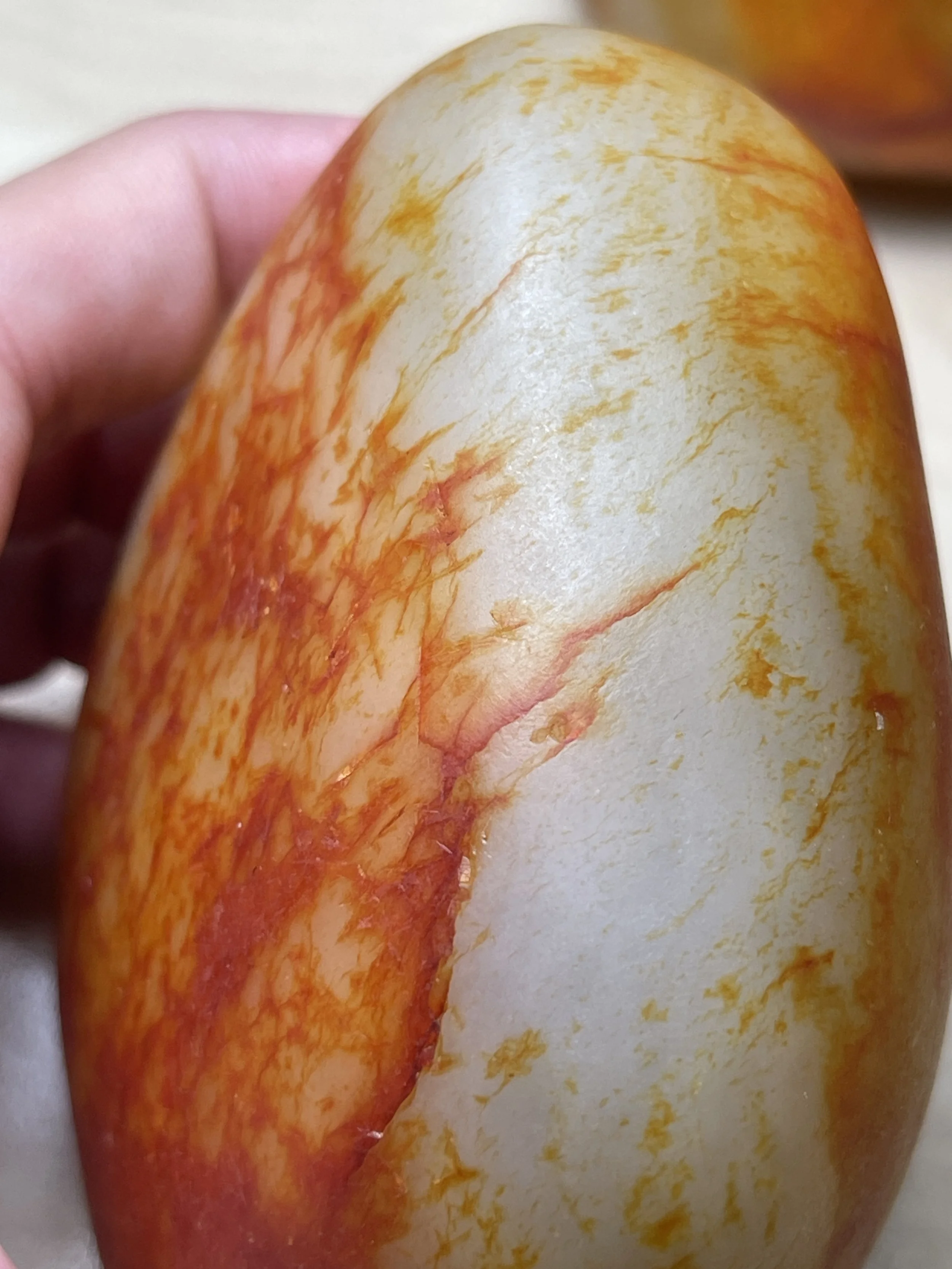
First 2 photos: superficial and spot-like dye, last 2 photos: natural staining - wispy, variation in hue and saturation
Natural iron oxide staining is an addition effect. The iron oxide in the river and river bed is deposited onto the surface and fissures of pebbles. More iron-rich the environment is, the pebbles are exposed to the iron for a longer period of time means more saturated and deeper staining. Based on the inherent porosity, this element will stain wherever is more porous first. As nephrite jade is made up of fibrous aggregates (which is why it is the toughest material), the staining forms a wispy, lively appearance.
Artificially dyed materials are dyed over a few sessions to imitate the depth of the saturation but they often lack the wispy and liveliness of the staining. While some samples we have seen are fully dyed, these 2 samples are partially dyed with a spotty look due to the spread of dye crystals applied during the dyeing process. These are extremely shallow and not lively. These dyed surface often comes off with the use of alcohol wipes as well.
At our laboratory, we will confirm this result non-destructively using advanced gemological tools to prove the presence of artificial dye.
Telltale Sign 3 - Surface pits are shallow and consistently similar
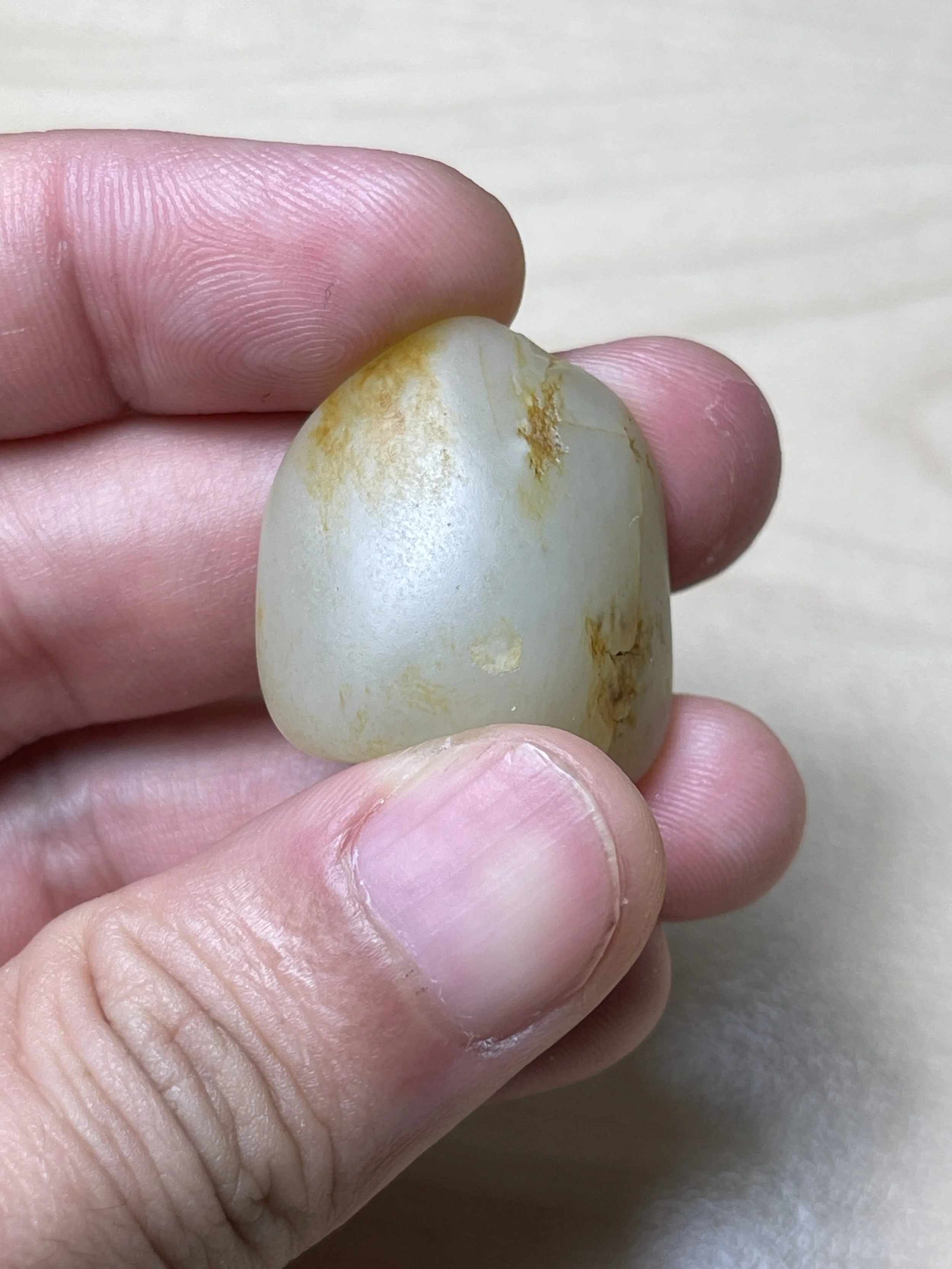
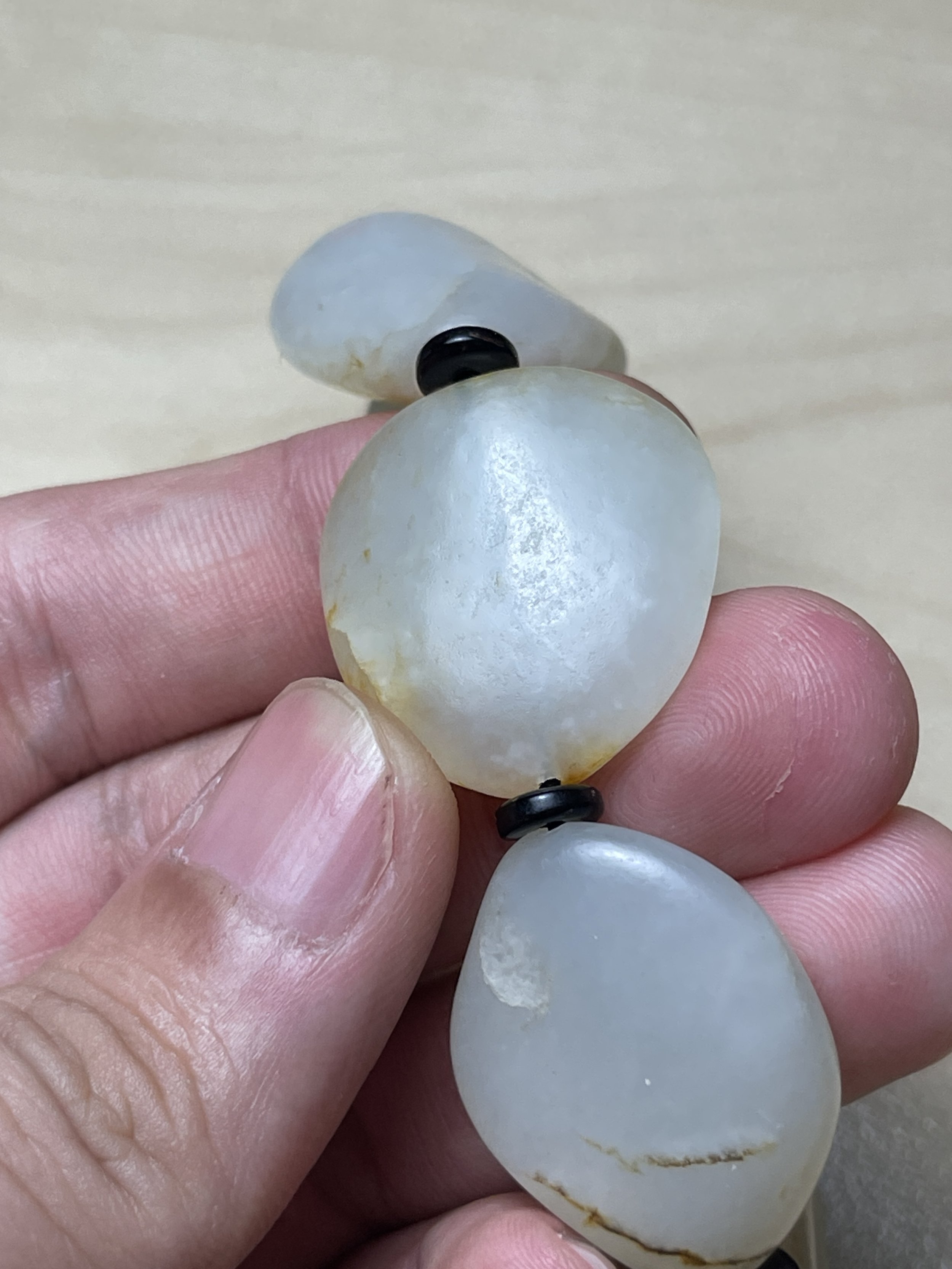
First 2 photos: non-naturally tumbled surface, last 2 photos: naturally tumbled surfaces
More characteristics to share next time!