
GemRight Gemology has detected its first case of fei cui of Guatemalan origin that displayed indications of artificial dye (Type C) on 21 November 2026. This is noteworthy as many in both local and overseas markets today still presume Guatemalan fei cui to be untreated due to its relative lower cost of production compared to their Burmese counterparts.
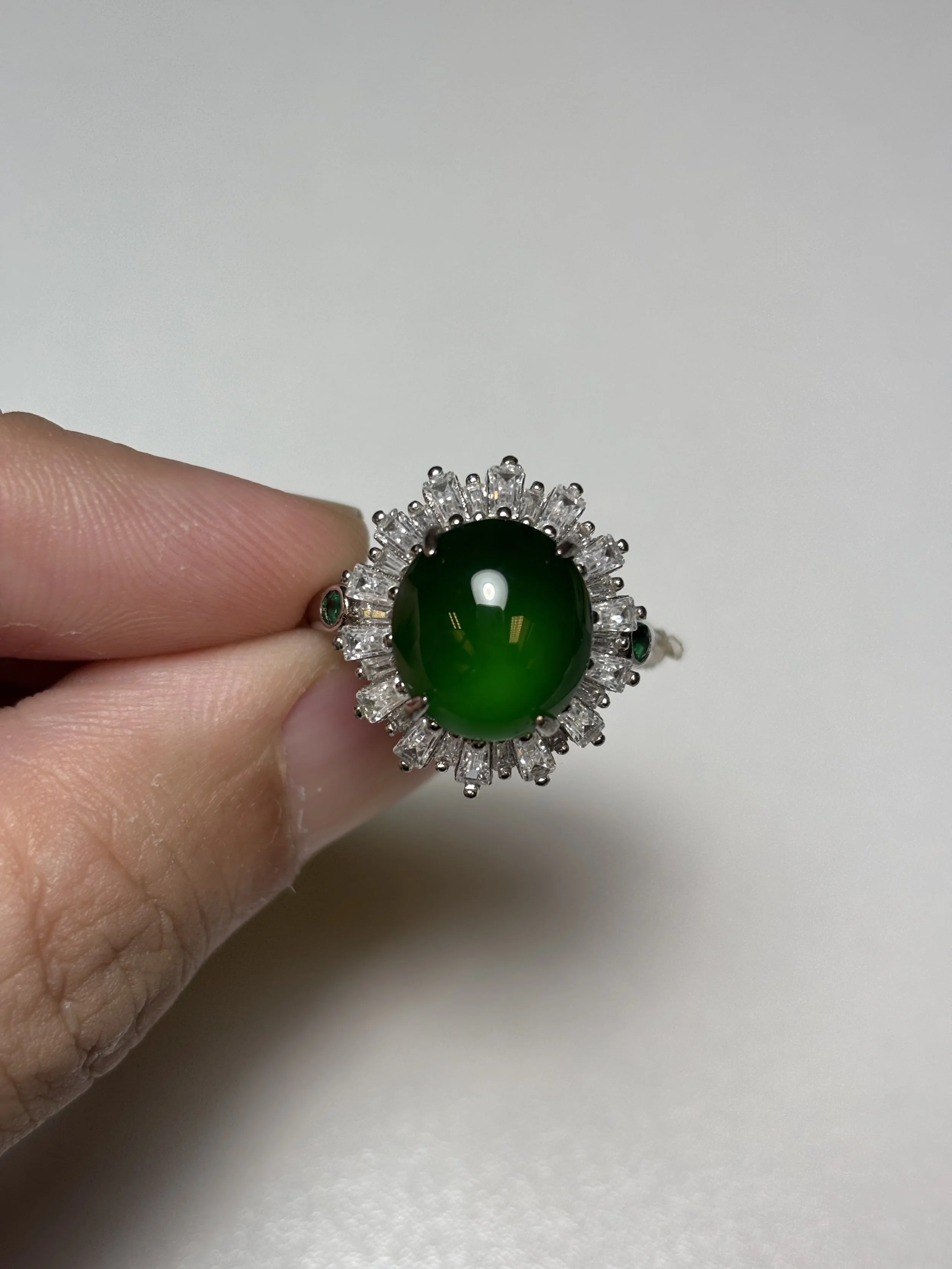
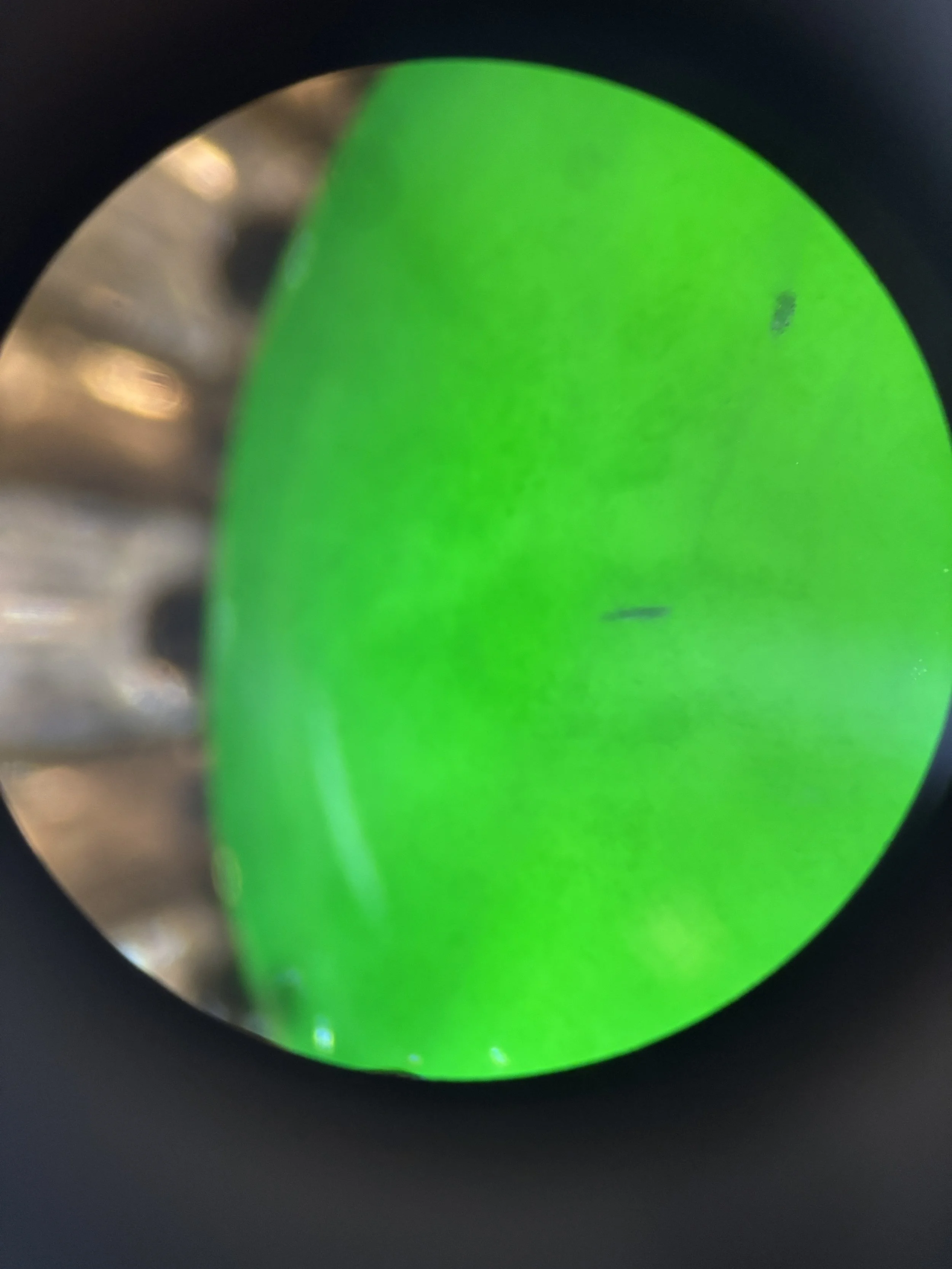
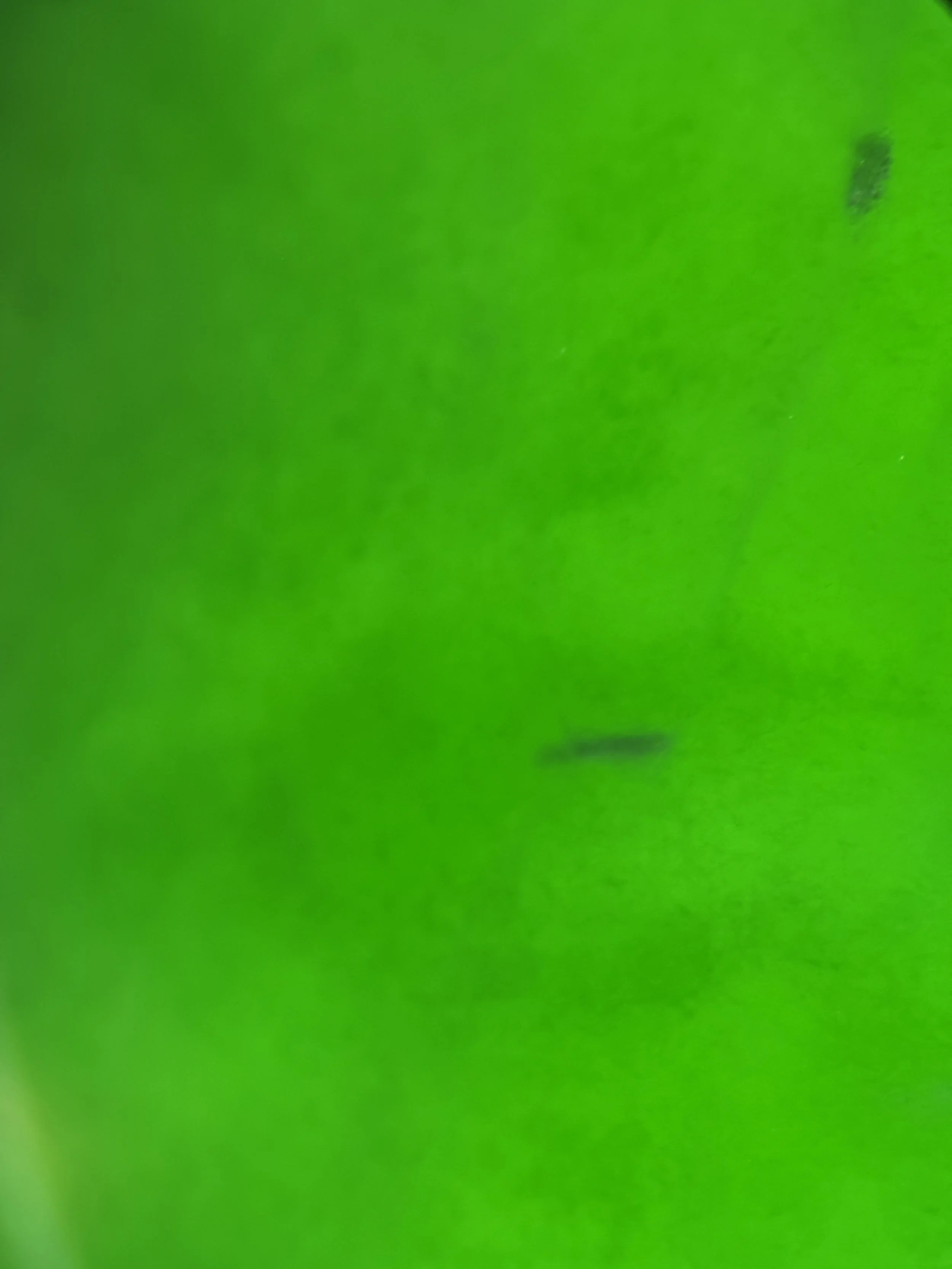
The cabochon centre stone is the item our client has requested for testing. According to our client, this item already has a report from country of origin concluding that it is Type A fei cui. Hence, our client only intended to seek an opinion on its origin.
Standard gemological testing confirmed the material to be within the range of jadeite/omphacite fei cui solid solution range. Upon microscopic examination, natural inclusions were detected, alongside patches of different hues of green with a fuzzy texture. This phenomenon is not uncommon for fei cui as colour zones can appear in a variety of shapes.
Nonetheless, we decided to examine the nature of the colour causation. UV-Vis-NIR confirmed that the colour is not of natural origin while FTIR confirmed that artificial nature of the colour (dye). The presence of artificial dye has masked the iron and chromium lines in its absorption spectrum.
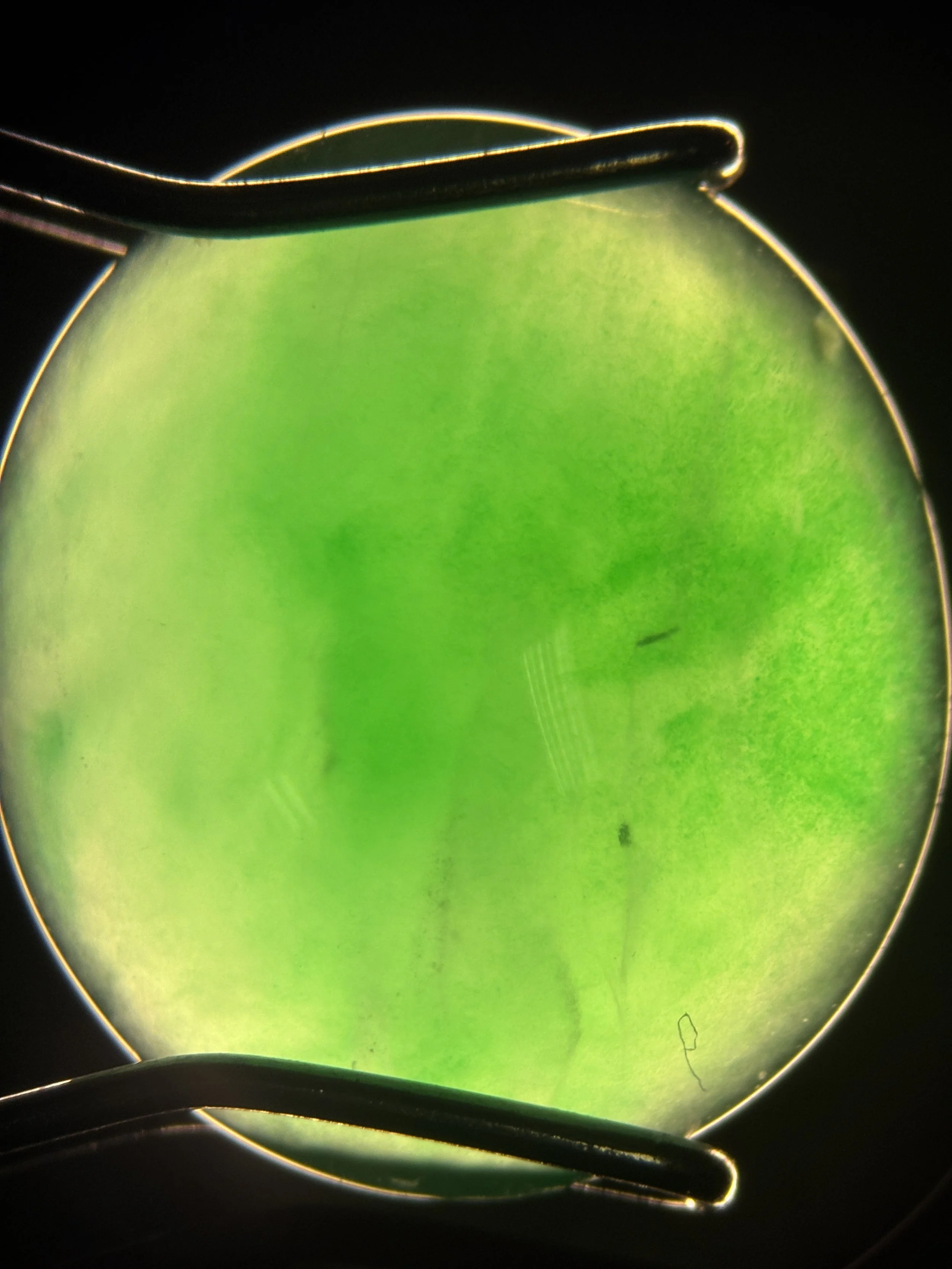
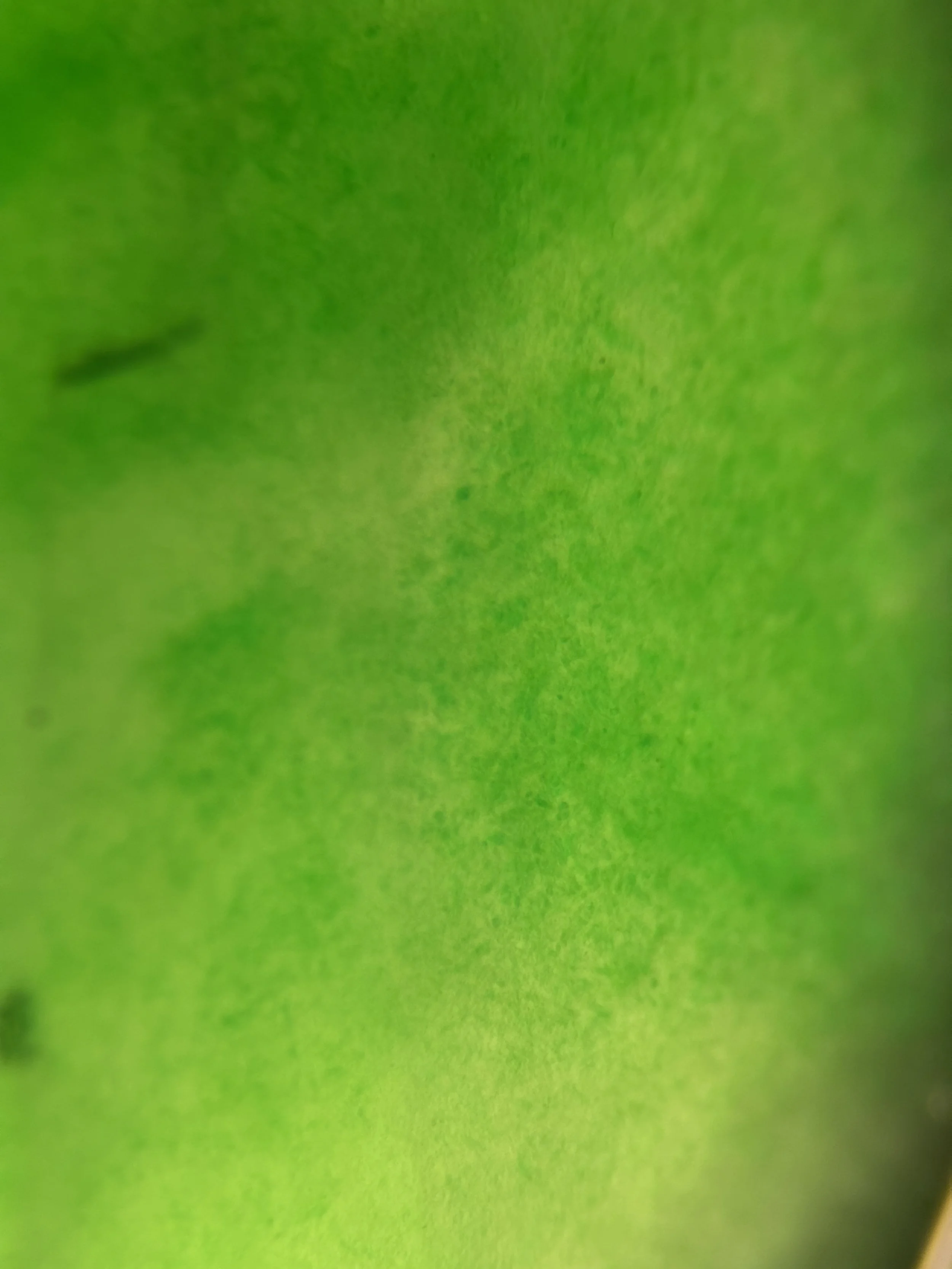
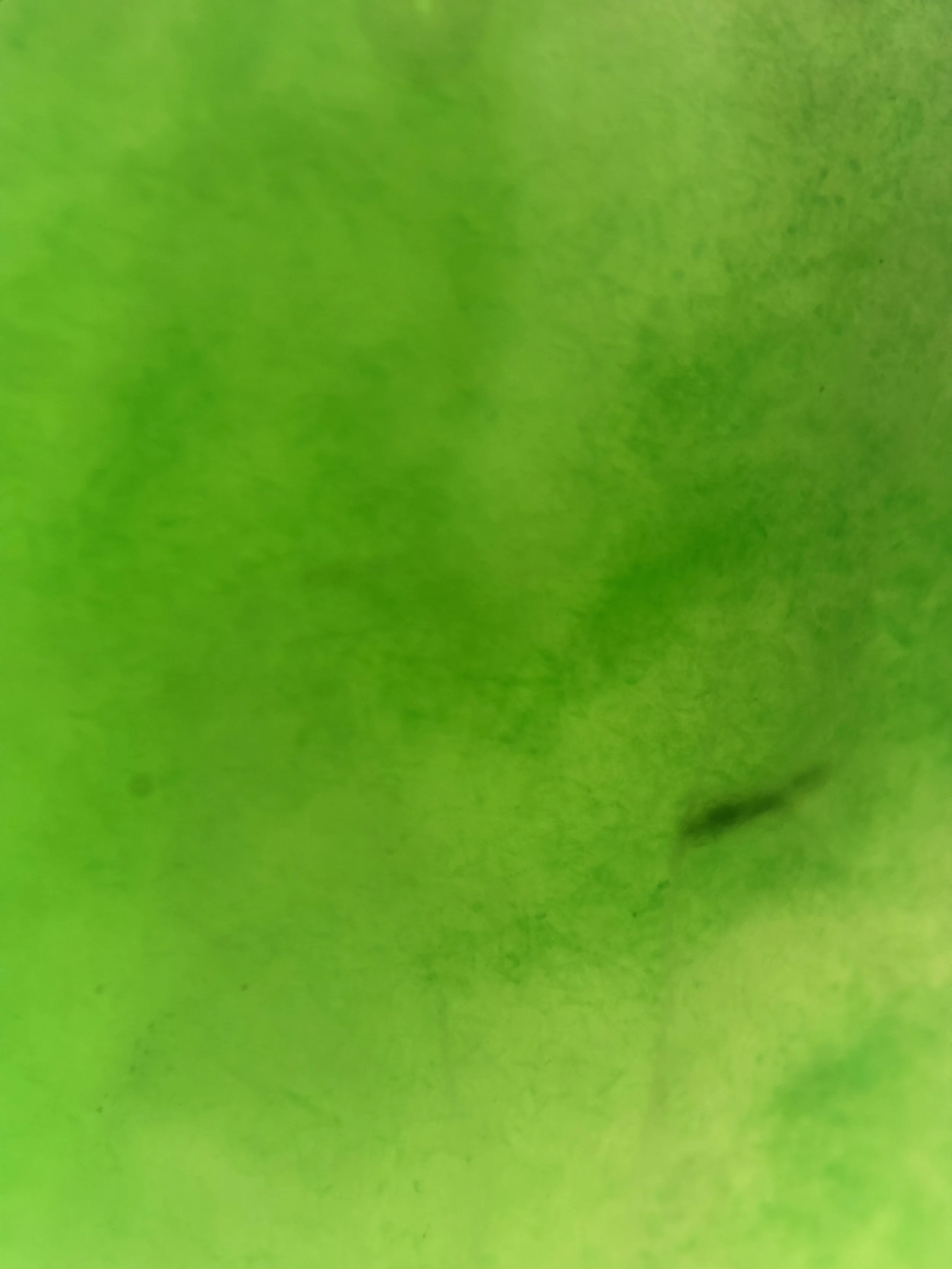
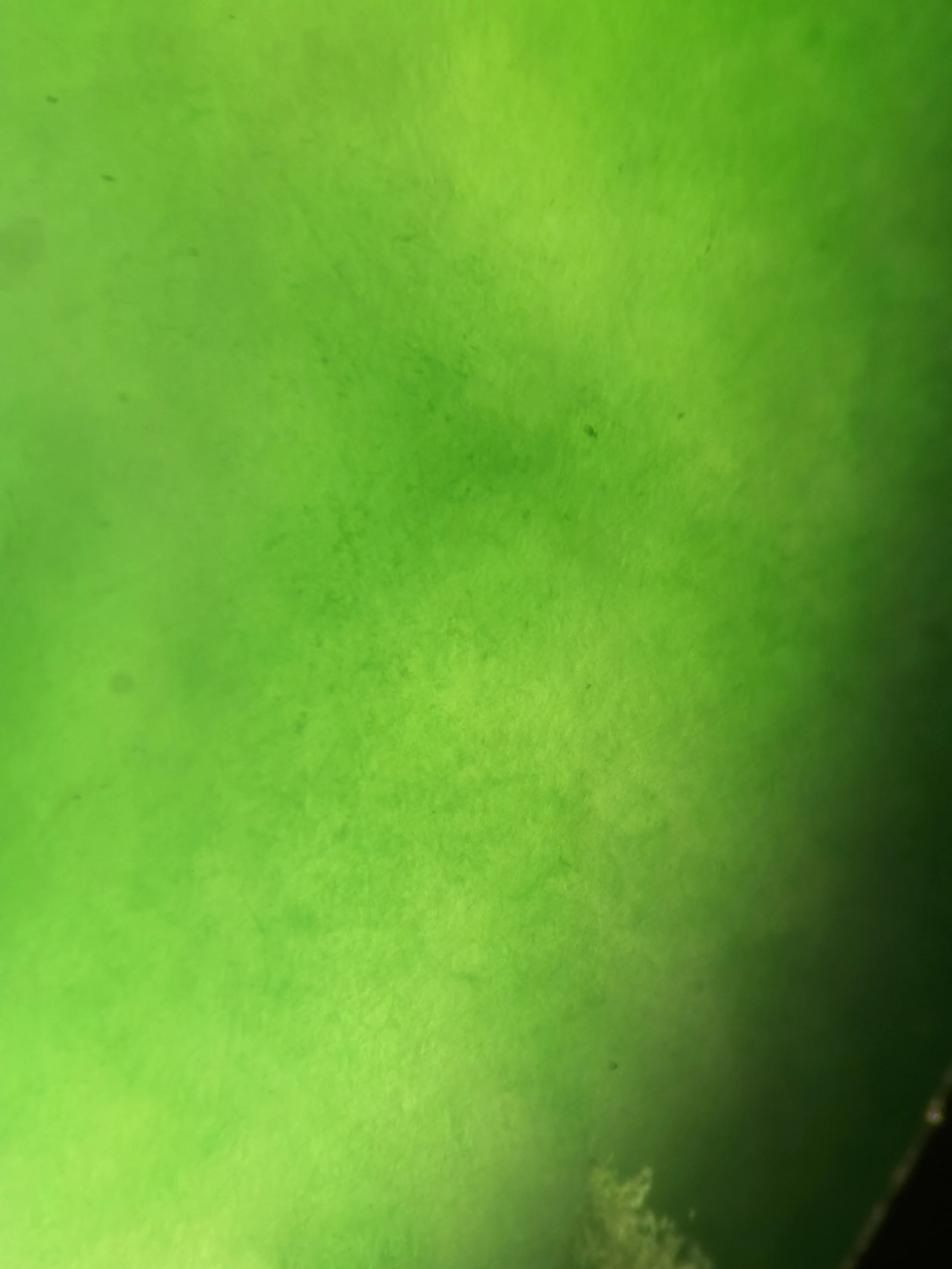
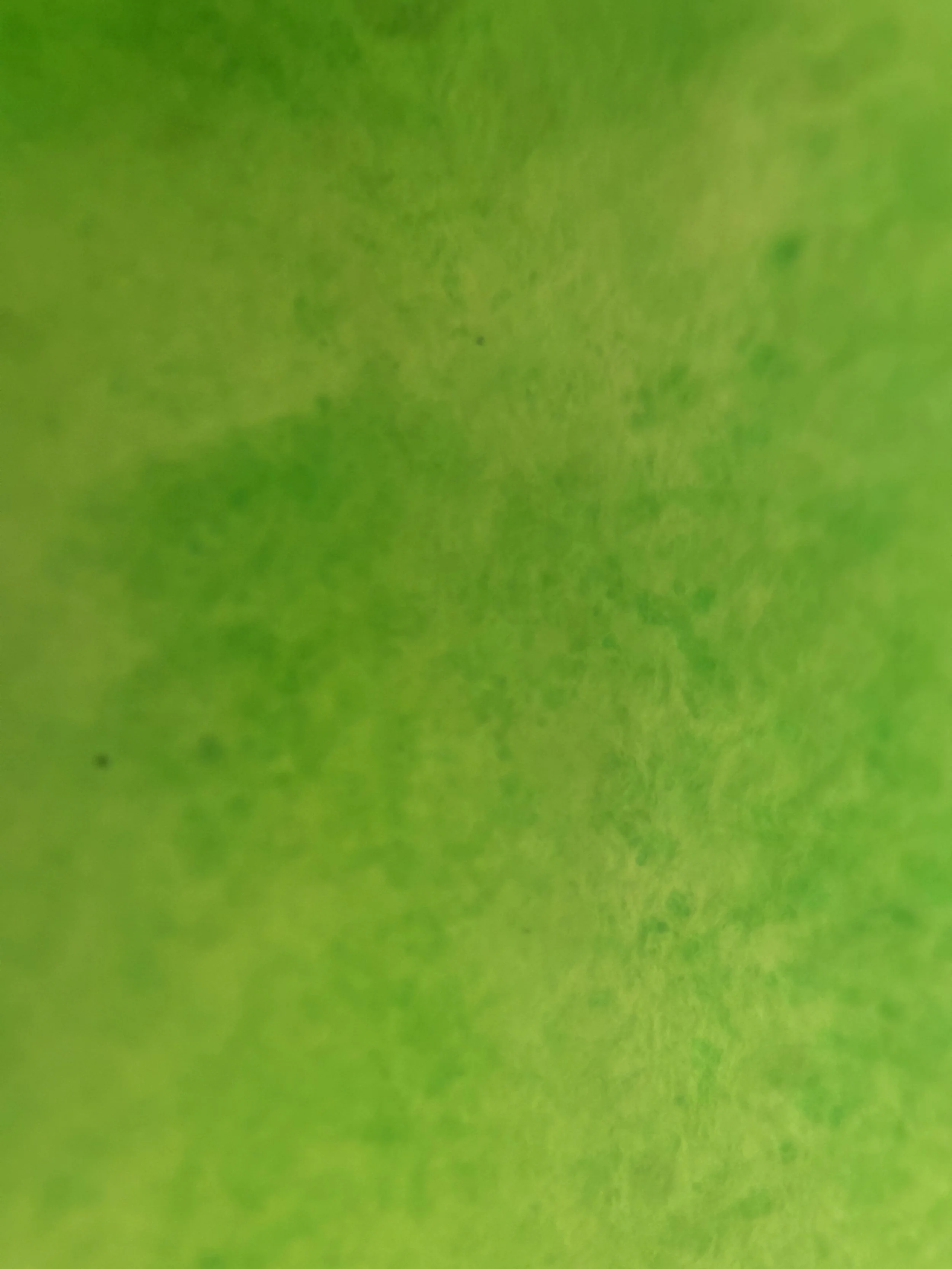
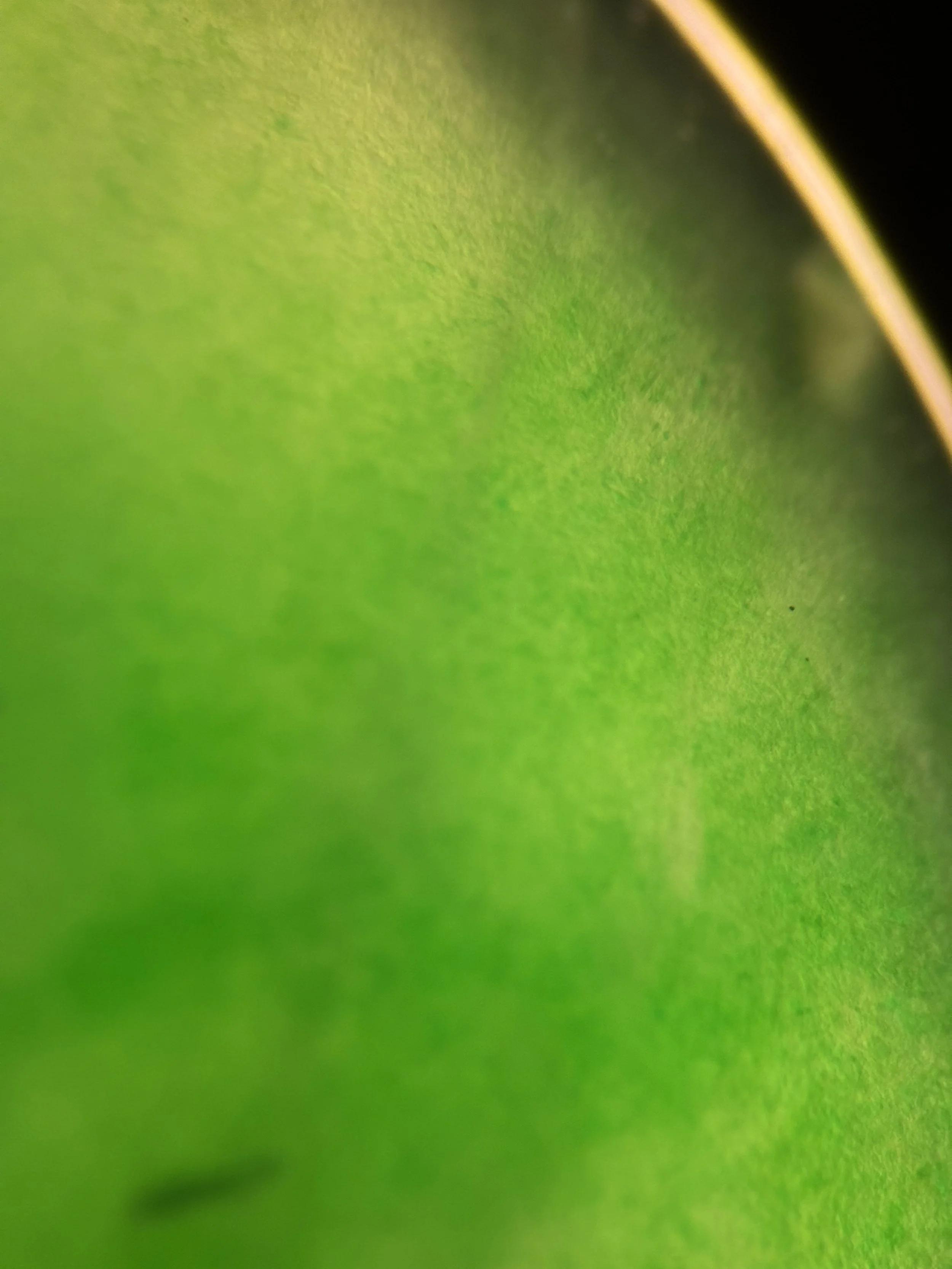
In darkfield illumination, as the graining is fine to medium, higher magnification has to be used to observe the root-like/web-like concentration of green colour between the grains. This phenomenon is a visual confirmation of unnatural colour origin as the green in fei cui does not present in this form. This has contributed to the fuzzy look before high magnification. As the interlocking nature is tighter for such materials, it is likely that the dye has not managed to access all of the material examined as there are areas without the concentration of colour.
We also observed that the edges of the material still display a gray colour when we tilt the sample in an angle. This may provide a subtle hint for buyers of mounted fei cui, though it takes some experience to learn what to observe.
Again, this is a reminder for us not to assume the lack of treatment even for Guatemalan fei cui and a validation of our laboratory testing procedures.