
Clarity Enhancement Using Coloured Resin in a Unheated Ruby
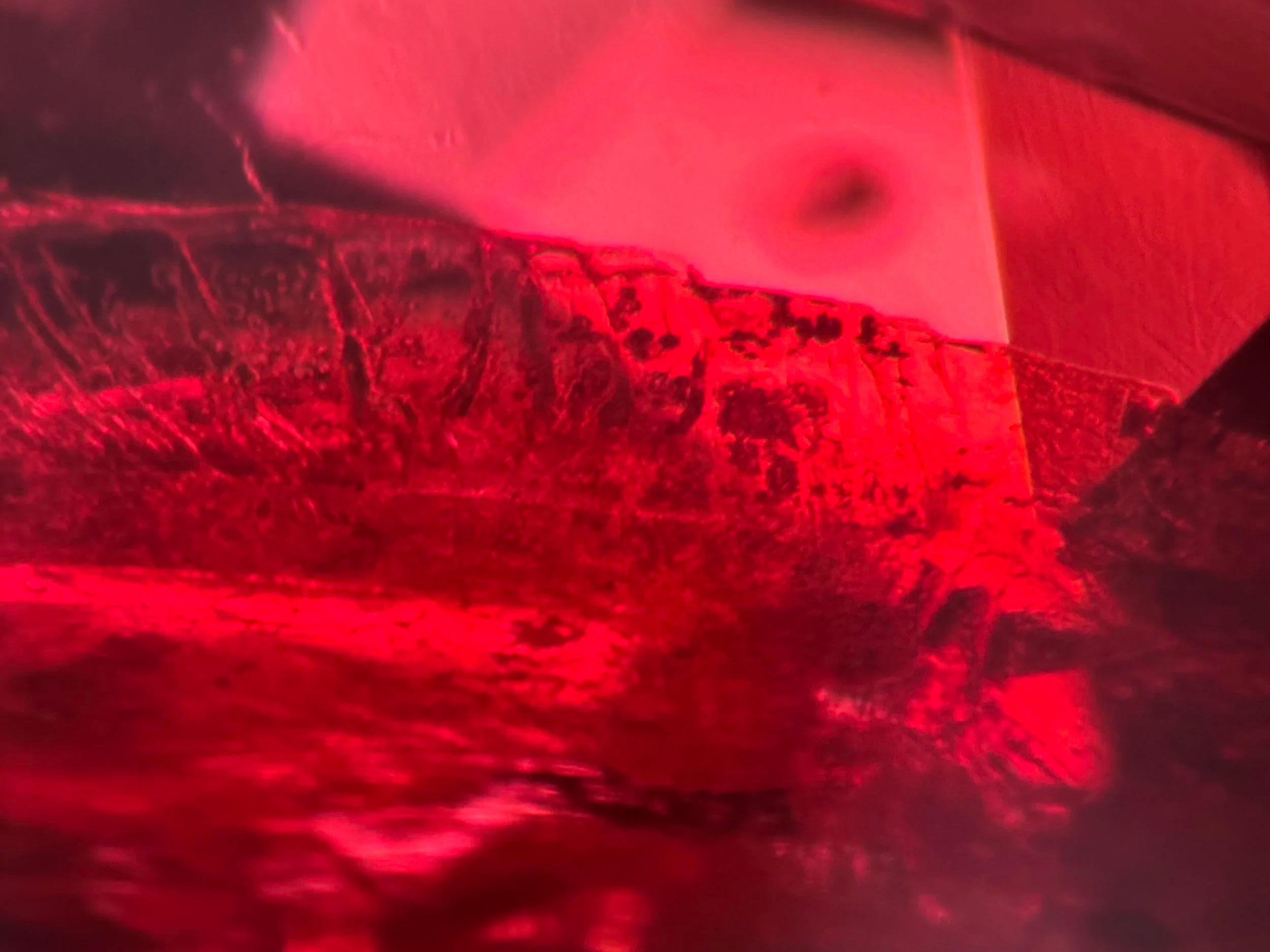
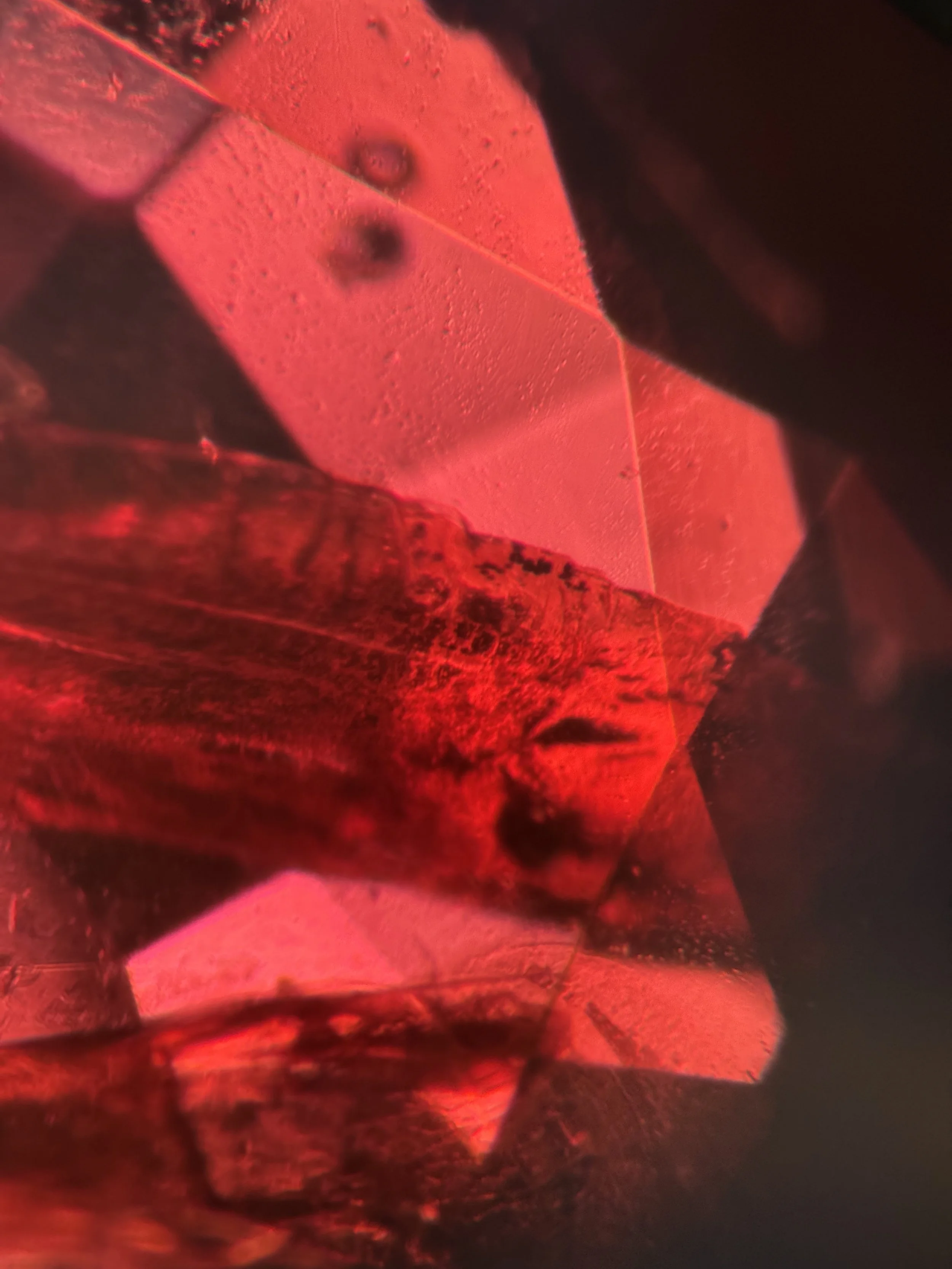
A surface-reaching fissureb that contained concentration of red colour and opaque patches within. FOV 2.4mm.
GemRight Gemology received a loose oval-shaped ruby for evaluation in March 2026 through its blind submission process.
The item was evaluated to be a natural ruby with no thermal enhancement detected. However, the ruby had several surface-reaching fissures, all with unusual concentration of red colour that is more saturated than the rest of the material adjacent to the fissures.
Within these fissures are also dried, patchy and opaque-looking solids, some of which are whitish in colour.
These unusual inclusions raised concerns about its treatment status and the item proceeded to testing using advanced gemological tools.
In particular, FTIR testing confirmed the presence of resin in the sample with UV-VIS-NIR testing confirming the presence of artificial red colour.
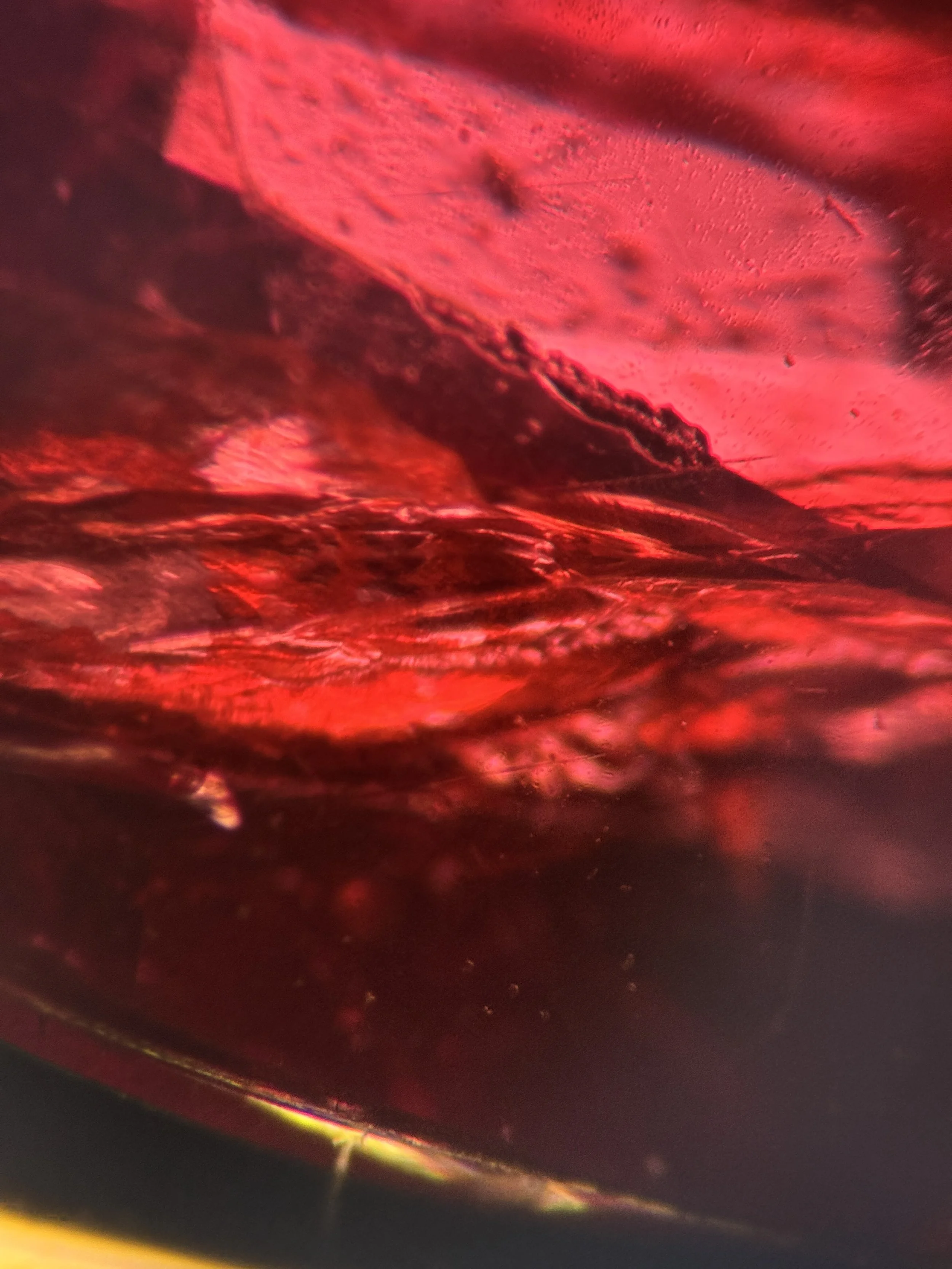
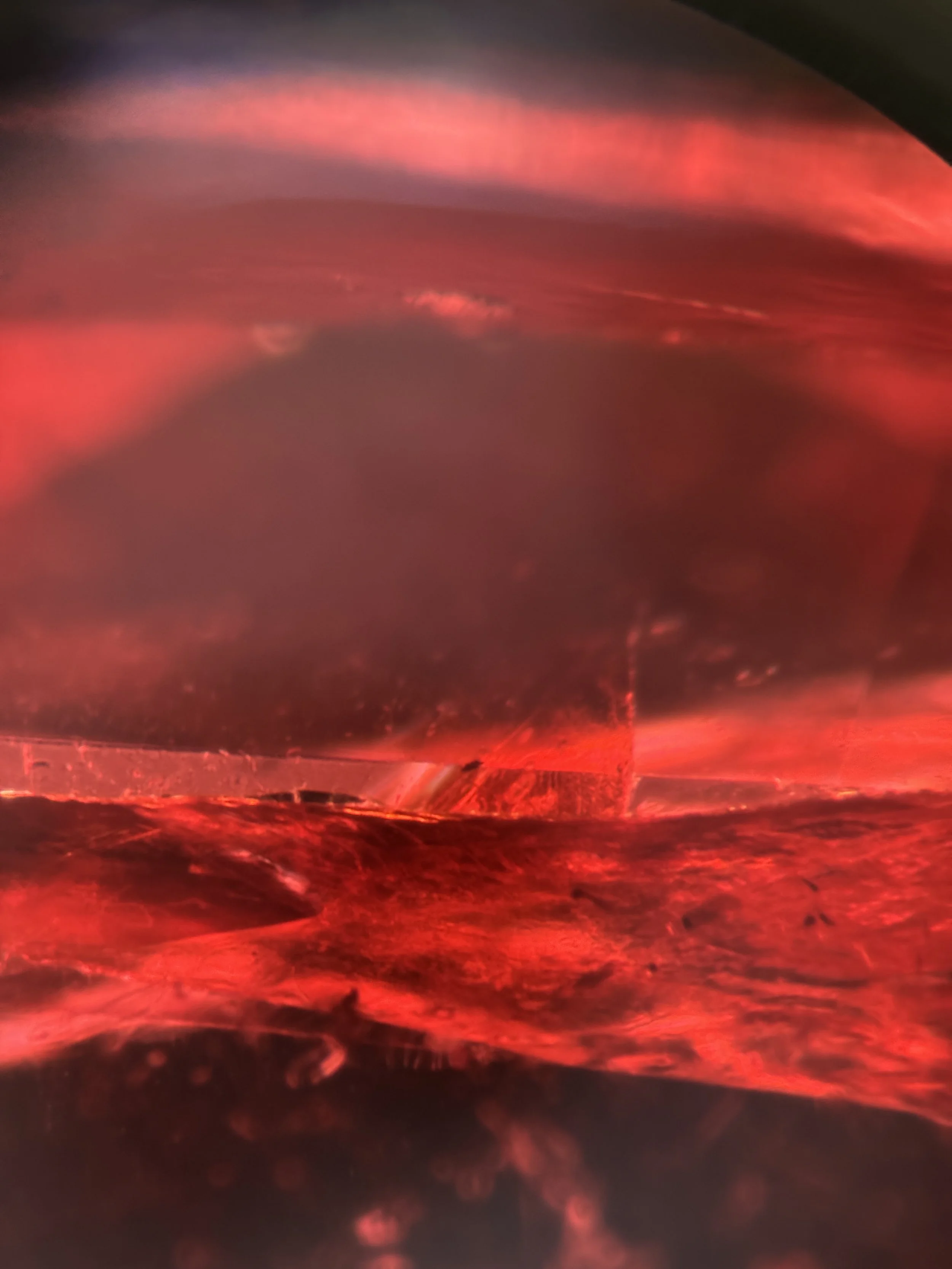
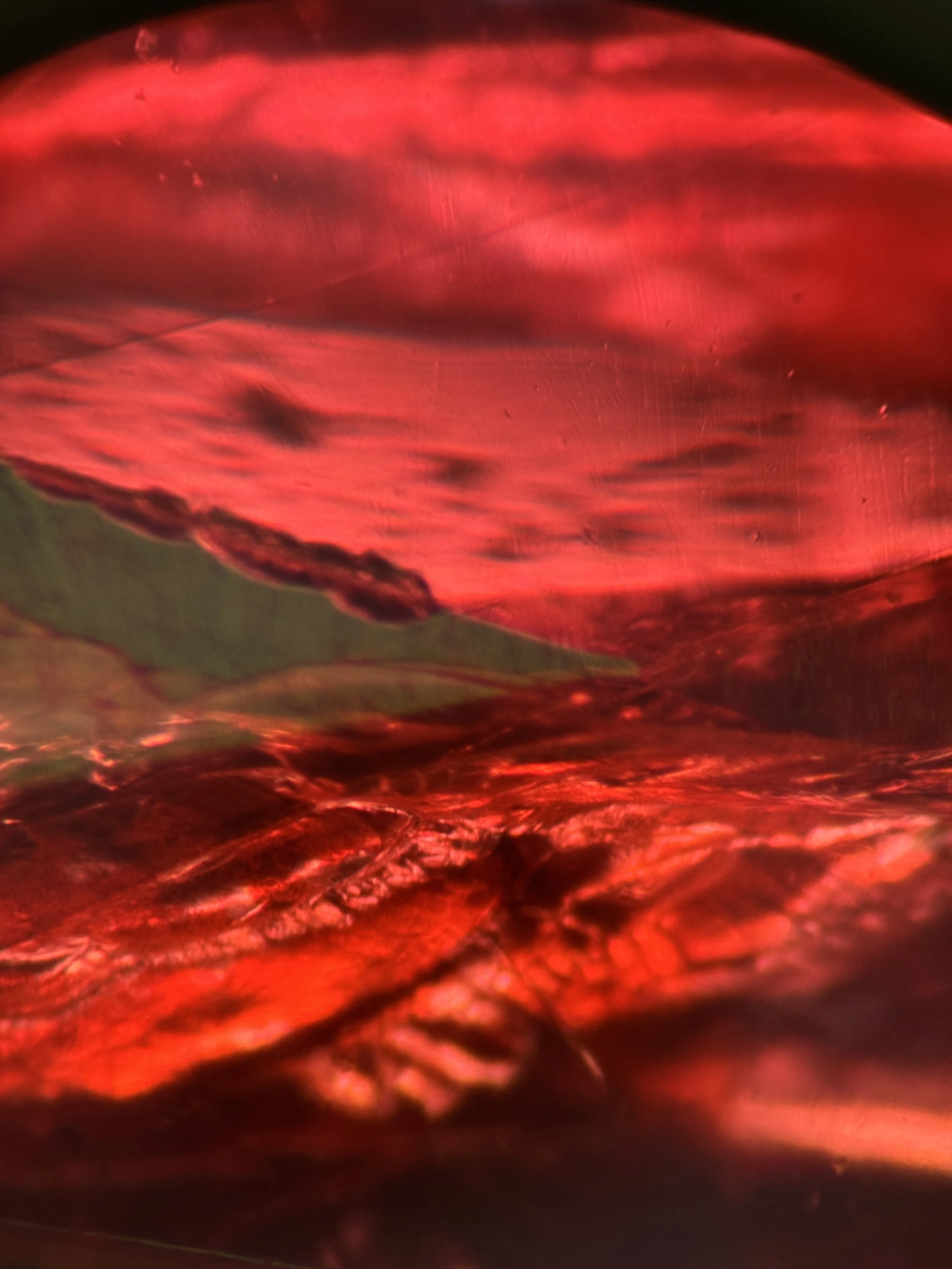
More importantly, the client had difficulty understanding this nature of enhancement as it is less heard of for corundums in the trade.
While heat treatment is common for corundums, they are not immune to other forms of enhancements such as the one discussed here. So if consumers’ only question to sellers is centred on heat treatment, they might be missing out on getting critical information to form a well-informed decision on the transaction.
As one of our usual recommendations, consumers have the option to agree with the sellers to first have the gemstone sent to an agreed gemological laboratory for evaluation before the completion of the transaction. Read this for more: